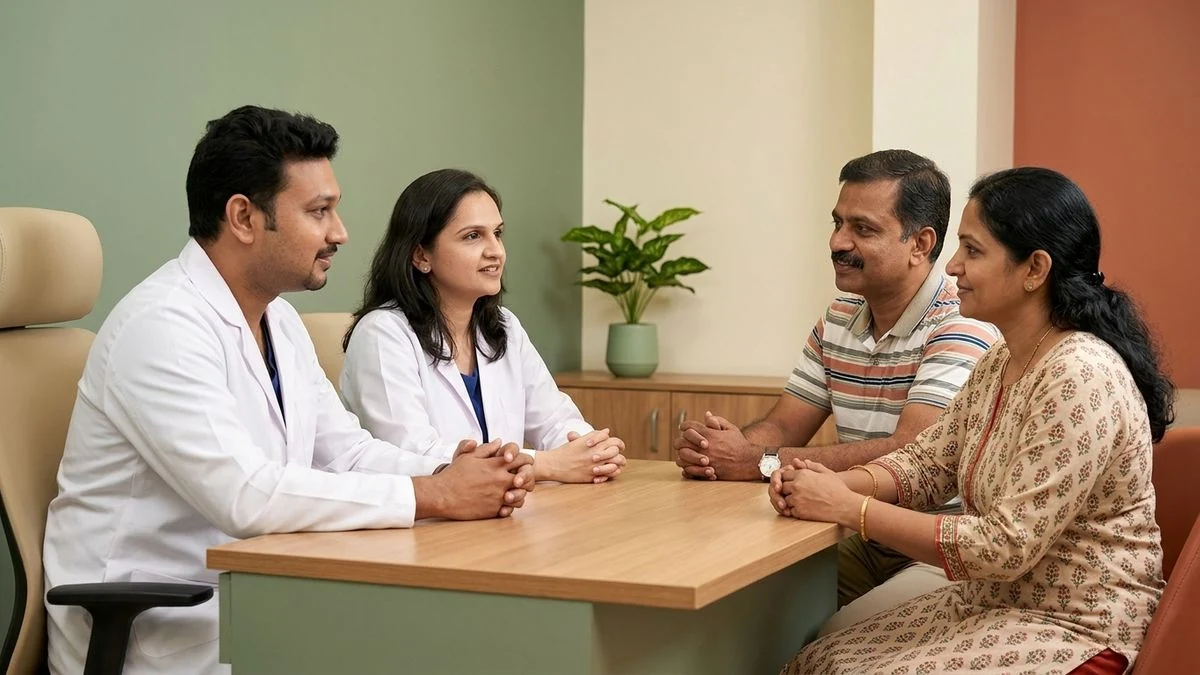
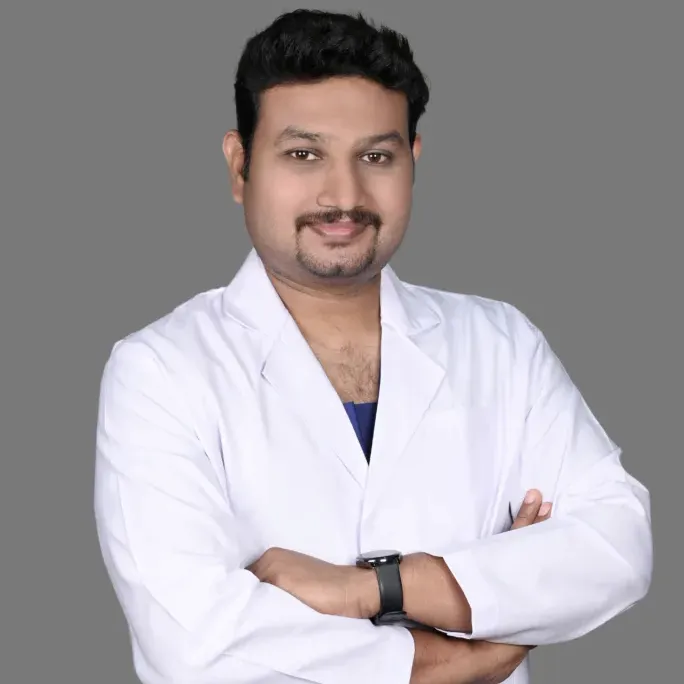
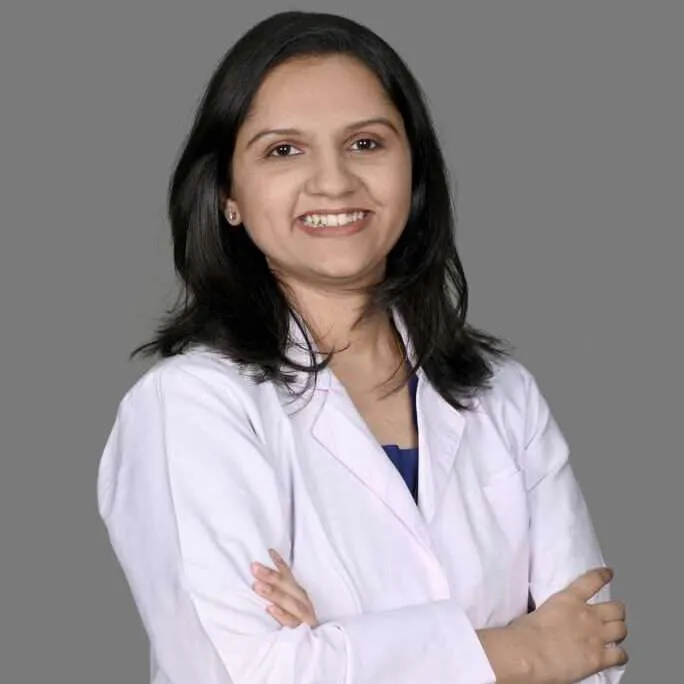
Apollo Main Hospital, Greams Road, Thousand Lights, Chennai · Dr. Pradeep S. & Dr. Kalpa Pandya
A second opinion can confirm your diagnosis, clarify the stage, and make sure the treatment plan is right for you before you commit. Both surgeons review your reports together and explain your options plainly.
Wanting another view on a cancer diagnosis is not a lack of trust in your first doctor — it is a reasonable response to a decision that is difficult to undo. Oral cancer surgery permanently changes anatomy you use to eat and speak, and the plan you agree to in the first week shapes the next several years.
A second opinion is worth seeking when the extent of surgery proposed feels larger than you expected, when reconstruction has not been clearly explained, when you have been told surgery is not possible, or simply when nobody has sat down and talked you through why this operation rather than another. Sometimes we confirm the original plan exactly — that is a useful outcome too, because you then proceed without doubt.
What we will not do is undermine a sound plan to win a case. If your local team has it right, we say so plainly.
What We Actually Review
A second opinion is only as good as the material it is based on. Before the consultation we go through what you already have, and tell you honestly if something essential is missing.
Biopsy and pathology report: The tissue diagnosis is the foundation. Where the report is unclear or the slides are borderline, we may suggest a pathology review before anything else.
Imaging: CT, MRI, or PET-CT showing how far the tumour extends and whether the neck nodes are involved. Films matter more than reports — we look at the images themselves.
The proposed plan: What operation has been recommended, whether a neck dissection is included, and what reconstruction is planned in the same sitting.
Your priorities: Speech, swallowing, appearance, time away from work, and cost all legitimately shape which plan is right for you — not only what is technically possible.
What to Send: A Practical Checklist
Most delays in a second opinion come from missing or unreadable records rather than from the review itself. Gathering the following before you contact us saves days.
Biopsy report and, where possible, the slides and blocks: The glass slides and the paraffin tissue blocks belong to you and can usually be released by the laboratory that processed the biopsy on written request. When the diagnosis or grade is in doubt, these allow a pathologist to re-examine the tissue rather than relying on the report alone. Our guide to reading a histopathology report explains the terms you will see.
Scans as digital files, not photographs: Ask the scan centre for a CD, DVD or download link containing the full DICOM images of your CT, MRI or PET-CT. Mobile photos of films or of a viewing screen miss most of the detail we need. Our article on PET-CT and MRI scans explains what each scan shows.
Treatment plan in writing: The proposed operation, whether the neck is to be treated, and the planned reconstruction, as written by your current team.
If you have already had surgery: The operation notes, discharge summary and final pathology report of the removed specimen, including margins and lymph node findings.
Other health details: A recent dental X-ray (OPG) if one was taken, blood reports, a list of current medicines, and any heart, diabetes or kidney history.
Once the records reach us, we look through them and tell you if anything essential is missing before the consultation. How long the review then takes depends on how complete the records are and whether slides need to be re-examined, so we give you a realistic timeline once we have seen what you have sent.
When a Second Opinion Changes the Plan
Most of the time a careful review confirms the broad direction of treatment. When it does change, it is usually in one of a few specific areas — and these are worth asking about directly.
Margins: How much healthy tissue is planned around the tumour, and — after surgery — whether the pathology report shows clear, close or involved margins. A close or positive margin may change what is advised next. Our article on positive margins and frozen section explains why this matters.
Neck management: Whether the lymph nodes in the neck should be removed when they look normal on scans, and how extensive that surgery needs to be. See when mouth cancer needs a neck dissection.
Extent of jaw resection: Whether a rim of the jawbone can be removed while keeping its continuity, or whether a full segment must go — a decision that depends on how close the tumour is to the bone on imaging and examination. Our mandibulectomy page describes both approaches.
Reconstruction: Whether a local flap, a PMMC flap or free flap reconstruction suits the defect, your health and your priorities. Free flaps are performed together with a reconstructive surgical colleague.
Treatment after surgery: Whether radiotherapy or chemotherapy is likely to be needed. These are planned and given by radiation and medical oncologists; we review the indications with you and coordinate with them. Our guide to radiation or chemotherapy after surgery explains the usual reasons.
Being told surgery is not possible: Sometimes this is correct, and sometimes the disease can still be operated on. We say honestly which applies, and if surgery is not the right path we discuss the alternatives covered in our article on advanced and recurrent mouth cancer options.
Questions Worth Asking at Any Second Opinion
Whether you consult us or another surgeon, these questions help you compare opinions on equal terms.
What exactly is the diagnosis and stage, and how confident are you in it?
What operation do you recommend, and what will be removed — including any teeth, bone or part of the tongue?
Will the neck be treated, and why or why not?
How will the area be reconstructed, and what will eating, speaking and appearance be like afterwards?
Is radiotherapy or chemotherapy likely afterwards, and what would decide that?
How long will I be in hospital, and how soon can I return to work or travel home?
Who will perform the surgery, and who will follow me up?
It helps to bring a family member who can take notes. If two opinions differ, ask each surgeon to explain the reason for the difference — the answer is often more useful than the recommendation itself.
Remote Second Opinions for Outstation and International Patients
Dr. Pradeep S. and Dr. Kalpa Pandya consult at Apollo Main Hospital on Greams Road — a tertiary centre patients travel a long way to reach. Alongside families from across Tamil Nadu and South India, we regularly see patients from West Bengal, Assam, and Bangladesh, where reaching a surgeon with head and neck oncology training can mean a long journey. Our guide for patients travelling from Bangladesh and West Bengal covers the journey step by step.
Travelling for surgery is expensive and disruptive, so the sequence matters: review first, travel second. Send your reports and scans, and we will tell you what we think before you book anything — including when the honest answer is that your existing plan is sound and travel is unnecessary.
Share reports over WhatsApp or email: Biopsy report, imaging (films where possible, not only the printed report), and any plan you have already been given.
Video consultation: We go through the findings with you and your family, in plain language, and answer questions without a queue outside the door.
A written view: You receive our assessment of the diagnosis, the operation we would recommend, and what reconstruction and recovery would involve.
Travel plans last: If surgery here makes sense, we set out how long to plan to stay, what happens on arrival, and what follow-up can be handled closer to home.
Planning Treatment If You Are Travelling to Chennai
For families coming from outside Tamil Nadu, the practical questions are usually about time and continuity rather than surgery itself.
How long to plan for: For a major resection with free flap reconstruction, plan roughly two to three weeks in Chennai — the inpatient stay plus a review once swelling has settled and drains and sutures are dealt with. Smaller excisions need considerably less.
Who you will see: Dr. Pradeep S. and Dr. Kalpa Pandya see you from the first consultation through follow-up. If a free flap is needed, it is done together with a reconstructive surgical colleague, and radiation or chemotherapy is planned with your oncologists.
Language and family: Dr. Pradeep S. consults in English, Tamil, Hindi, Telugu and Bengali, and Dr. Kalpa Pandya in English, Tamil, Hindi, Gujarati and Marathi, so most families can discuss the plan in their own language. We expect family to be present — decisions of this size are rarely made alone.
Follow-up after you go home: Later surveillance can often be shared with a surgeon closer to home, with imaging and reports reviewed by us remotely so nothing is lost in the handover.
Cost clarity before you commit: We set out what the surgery and stay involve financially before you travel, so there are no surprises — our guide to oral cancer treatment cost explains the factors involved.
Your Second Opinion with Dr. Pradeep S. in Chennai
Second opinions are led by Dr. Pradeep S., an oral and maxillofacial surgeon with a fellowship in head and neck surgical oncology (FHNS), international board certification (FIBCSOMS) and more than 15 years of experience in oral cancer surgery, including three years in the Department of Head and Neck Oncology at Apollo Proton Cancer Centre. He works with Dr. Kalpa Pandya, and both consult at Apollo Main Hospital, Greams Road, Chennai. Dr. Pradeep S. consults in English, Tamil, Hindi, Telugu and Bengali, which helps many families from West Bengal and Bangladesh.
For the wider picture of how oral cancer is treated, see our oral cancer treatment overview. To send your reports or book a consultation, call +91 96633 03747 or book an appointment for an oral cancer second opinion in Chennai.
Finding us in Chennai
Mouth Cancer Surgeons is based at Apollo Main Hospital on Greams Road, Chennai. Alongside patients from across Tamil Nadu and South India, we regularly see families travelling from West Bengal, Assam and Bangladesh, and we review scans and reports remotely before anyone commits to the journey.
Frequently asked questions
Can I get a second opinion without travelling to Chennai?
Yes. Send your biopsy report and imaging over WhatsApp or email and we will review them and arrange a video consultation. Most patients from outside Tamil Nadu start this way, and we tell you whether travelling is worthwhile before you spend anything on it.
What documents should I send for a remote second opinion?
The biopsy and pathology report, your imaging (CT, MRI, or PET-CT — the actual films or a disc where possible, not only the printed report), and any treatment plan you have already been given. If something essential is missing we will tell you what to obtain locally before the consultation.
Do you see patients from West Bengal, Assam, and Bangladesh?
Yes, regularly. Patients travel to Apollo Main Hospital, Greams Road from across eastern India and Bangladesh for oral cancer surgery and jaw reconstruction. We review scans and reports remotely first so the journey is only made when it is genuinely worthwhile, and we plan follow-up so that as much as possible can be done closer to home.
Will you tell me if my current treatment plan is already correct?
Yes. Confirming a sound plan is a legitimate outcome of a second opinion — it lets you proceed with confidence rather than doubt. We have no interest in moving a patient who is already in capable hands.
How quickly can I get a second opinion?
We prioritise newly diagnosed cancer patients and second opinions, because oral cancer is time-sensitive and waiting weeks for an opinion is not reasonable. How quickly we can give a view depends mainly on how complete your records are and whether biopsy slides need to be re-examined; we tell you the expected timeline once we have seen what you have sent.
Will my current doctor mind if I take a second opinion?
Experienced cancer surgeons expect patients to seek second opinions for major operations, and most are happy to share reports, scans and slides. You are entitled to copies of your own records. If our view matches your current plan, you can return to your doctor with more confidence; if it differs, we explain why in writing so the discussion with your team is straightforward.
Will a second opinion delay my treatment?
It should not cause a meaningful delay if records are sent promptly. A remote review can usually run alongside the tests your local team is already arranging. We are mindful that oral cancer should not be left waiting, and if we feel any delay would be unsafe, we tell you to proceed without waiting for us.
Do you review PET-CT scans and pathology slides?
Yes. We look at the PET-CT, CT or MRI images themselves rather than only the printed report, so please send the full scan files on a disc or download link. Where the biopsy diagnosis or grade is uncertain, we may suggest a review of the slides or tissue blocks by a second pathologist before anything else is decided.
What does a second opinion cost?
It depends on whether it is an in-person consultation or a remote review, and on whether additional tests or a pathology review are needed. Please check the current consultation fee when you book. If surgery is advised, we set out what it is likely to involve so you can obtain an estimate before deciding to travel.
How long should I plan to stay in Chennai for surgery?
For a major resection with free flap reconstruction, plan roughly two to three weeks — this covers the inpatient stay of about seven to fourteen days plus a review once swelling settles and drains and sutures are managed. Smaller excisions require a considerably shorter stay. We give you a specific estimate once we have seen your scans.
Who treats second opinion at Mouth Cancer Surgeons?
Dr. Pradeep S. (Consultant, Oral & Maxillofacial Surgeon — specialist in oral, head and neck cancer surgeries) and Dr. Kalpa Pandya (Consultant, Oral & Maxillofacial Surgeon — specialist in OPMD, Facial Trauma, Dental Implants). You are cared for by the same two specialists from diagnosis through recovery.
Where do you consult in Chennai?
We consult and operate at Apollo Main Hospital, Greams Road.