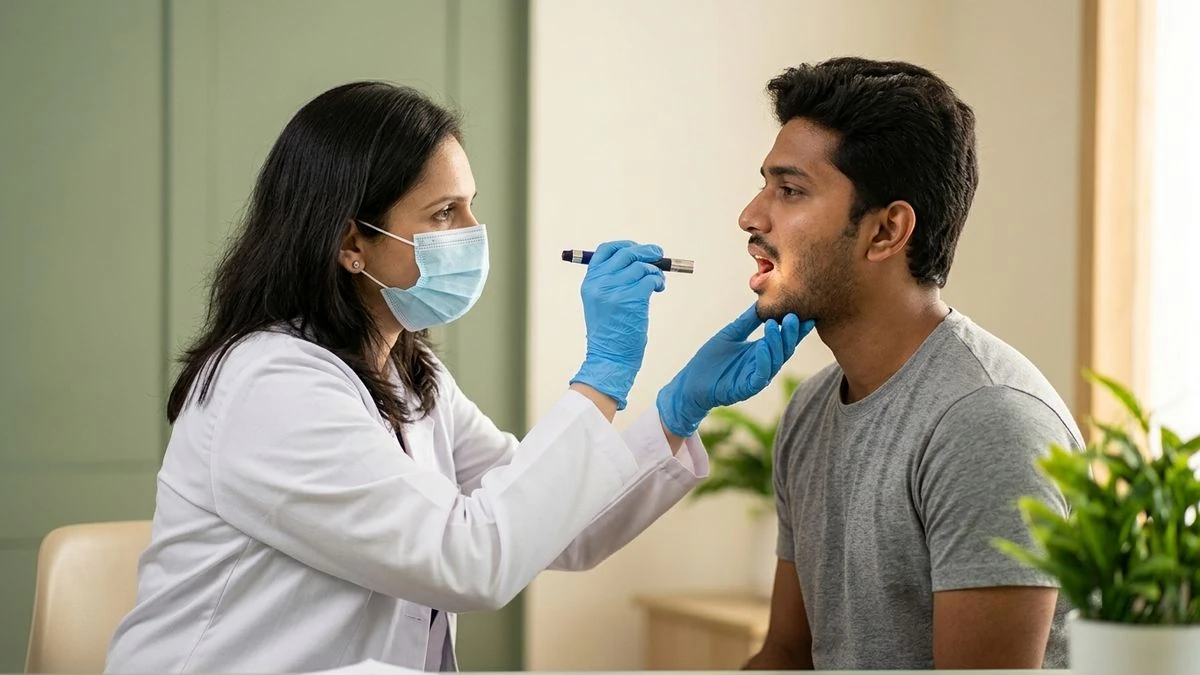
Glossectomy removes the cancer-bearing part of the tongue with a safe margin. We tailor the extent (partial, hemi or total) to the tumour and reconstruct to preserve speech and swallowing as far as possible.
Has a Tongue Ulcer or Growth Turned Out to Be Cancer?
Discovering a persistent ulcer, white or red patch, or a growth on your tongue can be deeply worrying — especially while you wait for a biopsy result. If you are still at the stage of wondering whether a mouth ulcer could be cancer, that guide walks through the warning signs. It helps to know that tongue cancer is a highly treatable condition when it is found and treated early, and that thousands of people return to eating, speaking, and normal life after surgery. The first step is simply to have it examined by surgeons who treat this every week.
A glossectomy, or tongue removal surgery, is the main treatment for tongue cancer. The goal is to completely remove the cancerous tissue, reduce the chance of it coming back, and keep as much of your speech and swallowing as possible. It is one part of comprehensive oral cancer surgery that is tailored to your exact diagnosis rather than a one-size-fits-all operation.
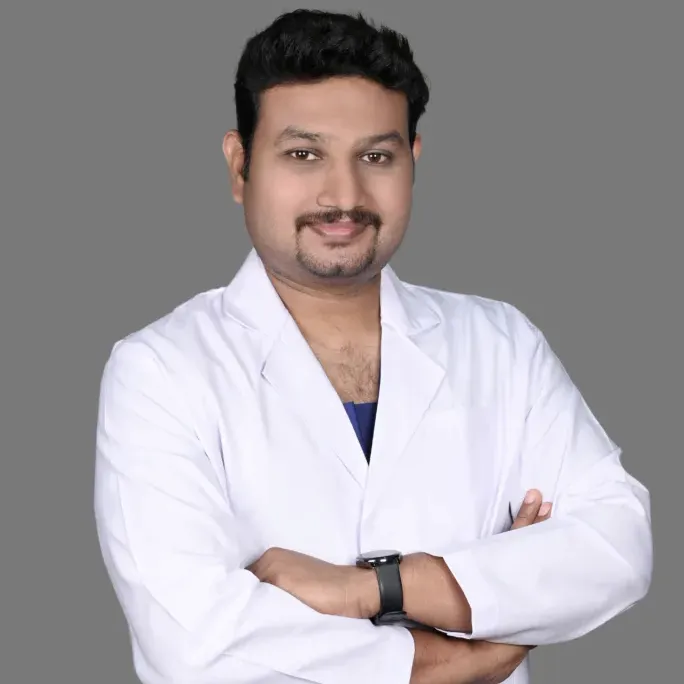
Dr. Pradeep S. and Dr. Kalpa Pandya, our experienced oral & maxillofacial surgery (OMFS) specialists, guide you through every step — from understanding your biopsy report to planning surgery and supporting your recovery — with clear explanations, honest answers, and surgical precision.
What Causes Tongue Cancer? Risk Factors and Early Signs
Tongue cancer most often develops in the lining cells of the tongue, and several everyday habits raise the risk. Understanding these helps you act early and protect family members who share the same habits — and in Tamil Nadu, chewing-tobacco and areca-nut use makes awareness especially important.
Tobacco and gutka: Smoking and chewing tobacco, gutka, or pan masala are the leading risk factors for tongue and mouth cancer.
Areca nut and betel quill: Long-term areca-nut (supari) and betel-quill chewing irritates the lining and is strongly linked to oral cancer.
Alcohol: Regular alcohol use, particularly alongside tobacco, multiplies the risk.
Long-standing irritation and OPMD: Sharp teeth, ill-fitting dentures, and oral potentially malignant disorders (OPMD) such as leukoplakia or oral submucous fibrosis can precede cancer and need monitoring.
Warning signs worth checking promptly include an ulcer or sore on the tongue that does not heal within two to three weeks, a lump or thickened area, a red or white patch, unexplained pain, bleeding, numbness, or difficulty moving the tongue. None of these always means cancer, but any of them lasting beyond a few weeks deserves a professional examination — our guide to the early warning signs of oral cancer covers what to look for.
Diagnosis and Planning Before Tongue Cancer Surgery
Careful planning before surgery is what makes complete, function-preserving removal possible. Once tongue cancer is suspected or confirmed, Dr. Pradeep S. and Dr. Kalpa Pandya assess exactly where the tumour is, how deep it goes, and whether it has spread, so that the operation can be sized correctly the first time.
Biopsy: A small tissue sample confirms the diagnosis and the type of cancer before any surgery is planned — our guide to tongue SCC biopsy and staging explains what the report means.
Imaging: Scans such as MRI, CT, or PET-CT show the size and depth of the tumour and check the neck lymph nodes.
Staging: The cancer is staged to guide whether surgery alone is enough or whether additional treatment may be advised afterwards.
Pre-operative consult: You meet your surgeons to discuss the plan, the expected recovery, and any reconstruction, and to have your questions answered before you decide.
This planning stage is also when fitness for anaesthesia, dental health, and nutrition are reviewed, and when a multidisciplinary view — including oncology and rehabilitation input — is brought together so the whole pathway is clear before the day of surgery.
Types of Glossectomy: Partial, Hemi, and Total
A glossectomy is the surgical removal of all or part of the tongue, and how much is removed depends entirely on the size, depth, and location of the tumour. Smaller, early cancers need only a small amount of tissue removed, while larger tumours need a more extensive operation followed by reconstruction. Your surgeons always aim to remove the cancer fully while keeping as much working tongue as possible.
Partial glossectomy: Only a small portion of the tongue is removed, which is ideal for early-stage cancers and usually allows speech and swallowing to recover quickly.
Hemi-glossectomy: About one side of the tongue is removed, often with careful reconstruction to maintain shape and function.
Total glossectomy: The entire tongue is removed for advanced cases, followed by comprehensive reconstructive surgery to rebuild bulk and protect the airway and swallowing.
How the Tongue Cancer Operation is Performed
Every tongue cancer operation is planned meticulously to achieve complete cancer removal while preserving as much speech and swallowing function as possible. The surgery is carried out under general anaesthesia, and where the cancer may have spread to the neck, it is often combined with a neck dissection during the same operation so you recover from one anaesthetic rather than two.
Surgical margins: The surgeons remove the tumour together with a safe margin of healthy tissue, so no cancer cells are left behind at the edges.
Frozen-section control: During the operation, tissue samples are analysed immediately in the lab to confirm the margins are completely clear before closing.
Neck dissection: If there is a risk of spread, the lymph nodes in the neck are carefully removed and examined to clear disease and stage it accurately.
Reconstructive surgery: For larger defects, tissue transfer rebuilds the tongue — this may involve a PMMC flap or other microvascular tissue transfer coordinated with the wider surgical team at our affiliated Apollo or partner hospital.
Recovery, Speech, and Eating After Tongue Cancer Treatment
Healing after a tongue cancer operation involves both physical recovery and functional rehabilitation, and knowing the rough timeline ahead of time makes it far less daunting. Most patients stay in hospital for about 7 to 14 days, particularly when reconstruction is performed, and you are supported with feeding and pain relief from day one. Over the following weeks, swelling settles and you gradually return to your normal routine.
The first days focus on safe healing of the surgical site, often with feeding through a temporary tube before you move to liquids and then soft foods — eating well during treatment makes a measurable difference to healing. Speech and swallowing therapy usually begin while you are still in hospital and continue as an outpatient, and for most partial glossectomies, clear speech and a comfortable diet return within a few weeks. Larger surgeries take longer and improve steadily with consistent rehabilitation, and life after tongue cancer surgery sets out what that looks like month by month.
Speech therapy: Targeted exercises help you adapt to changes in your tongue so you can speak clearly again — see our speech and swallowing recovery guide.
Swallowing rehabilitation: Our team works with swallowing therapists to move you safely from liquid feeds to soft and then regular foods.
Pain management: Modern, tailored pain-relief protocols keep you comfortable throughout your hospital stay and home recovery.
Follow-up and surveillance: Regular reviews check healing, support rehabilitation, and watch for any early signs of recurrence.
Expert Care with Our Chennai Oral & Maxillofacial Surgeons
When facing tongue cancer, having a consistent, dedicated surgical team makes all the difference. Dr. Pradeep S. and Dr. Kalpa Pandya personally manage your care from your initial diagnosis through surgery and long-term follow-up, so you see the same familiar faces at every stage rather than being passed between strangers.
Dr. Pradeep S. brings specialised expertise in head & neck surgical oncology, consulting at Apollo Main Hospital, Greams Road, Chennai.
Dr. Kalpa Pandya offers over a decade of experience in managing oral potentially malignant disorders (OPMD) and complex reconstructions, also consulting at Apollo Main Hospital, Greams Road, Chennai.
Together they provide a coordinated, compassionate treatment experience, working alongside oncology, pathology, and rehabilitation colleagues so that surgery, recovery, and surveillance fit into one clear plan. Our practice warmly welcomes patients travelling from across Chennai and the wider South India region, offering second opinions and coordinated care — including remote consultations — for outstation families who want clarity before they travel.
What to expect
1Assessment & staging
2Resection with frozen-section margins
3Neck dissection where indicated
4Reconstruction
5Speech & swallow rehabilitation
Glossectomy — watch & learn
Oral Cancer Staging: What You Need to Know & Why It's Crucial
An explainer on how oral cancer is staged and why accurate staging is crucial for planning treatment.
Oral Cancer Treatment Guide: Diagnosis, Surgery, Recovery — Dr. Pradeep S.
Dr. Pradeep S. walks through the full oral cancer journey — diagnosis, surgery and recovery — in this Apollo 24|7 feature.
Does Mouth Cancer Spread Due to Biopsy?
Part of the myth-busting series — addressing the fear that a biopsy spreads mouth cancer.
Glossectomy — patient guides
Doctor-written explainers — authored by one surgeon and medically reviewed by the other.
A glossectomy is a surgical procedure to remove all or part of the tongue to treat tongue cancer. It is designed to eliminate the tumour while preserving as much oral function as possible.
How is tongue cancer surgery in Chennai performed?
The surgery is performed under general anesthesia. The surgeon removes the tumour with a safe margin of healthy tissue, often using frozen-section control to ensure all cancer is gone, followed by reconstruction if needed.
How much does tongue cancer surgery cost in Chennai?
The cost of tongue cancer surgery in Chennai depends on the tumour size, the need for neck dissection, reconstruction type, and the hospital stay. We assist with insurance pre-authorizations to help manage costs.
What is the recovery time after a glossectomy?
Initial hospital recovery takes about 7 to 14 days, especially if reconstruction is performed. Complete healing and functional speech or swallowing rehabilitation can take several weeks to a few months.
Will I be able to speak normally after tongue removal surgery?
For a partial glossectomy, speech usually returns to near-normal quickly. For larger surgeries, dedicated speech therapy helps you adapt and regain clear, functional communication over time.
How soon can I get an appointment for a second opinion?
We prioritize urgent cancer consultations. You can typically secure an appointment or a remote second opinion with Dr. Pradeep S. or Dr. Kalpa Pandya within 24 to 48 hours.
Is a neck dissection always necessary during a tongue cancer operation?
A neck dissection is performed if imaging or clinical examination suggests the cancer has spread to the lymph nodes, or if the tumour depth indicates a high risk of microscopic spread.
What are the early warning signs of tongue cancer?
Watch for a tongue ulcer or sore that does not heal within two to three weeks, a lump or thickened area, a persistent red or white patch, unexplained pain, bleeding, or numbness. Any of these lasting beyond a few weeks should be examined promptly.
Where do Dr. Pradeep S. and Dr. Kalpa Pandya perform surgeries?
They perform surgeries and consult at Apollo Main Hospital on Greams Road, a premier institution in Chennai.
Glossectomy in Chennai
Our practice provides comprehensive tongue cancer treatment Chennai patients can access at leading medical hubs, including Apollo Main Hospital on Greams Road, serving areas like Adyar, Anna Nagar, Velachery, and Tambaram.