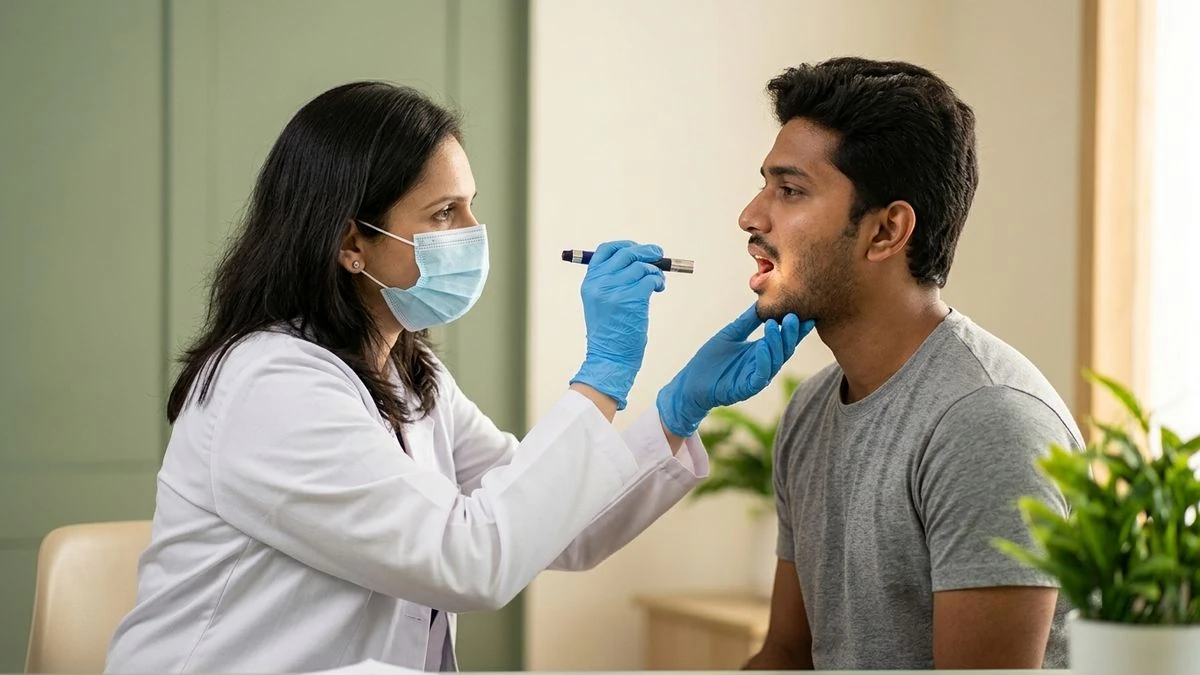
When jaw-joint pain or a locked jaw does not settle with conservative care, TMJ surgery can help — from minimally invasive arthrocentesis (a joint washout) for pain and stiffness, to ankylosis release for a fused jaw, restoring the ability to open the mouth, followed by physiotherapy.
Is Your Jaw Pain and Stiffness Making It Hard to Eat?
Persistent jaw pain, clicking sounds, and difficulty opening your mouth can significantly affect your quality of life. The temporomandibular joint, or TMJ, is the complex hinge connecting your jawbone to your skull. When this joint becomes inflamed, damaged, or fused, it can lead to severe discomfort and restricted movement. While many mild joint issues resolve with conservative medical management, some conditions require surgical intervention to restore normal function.
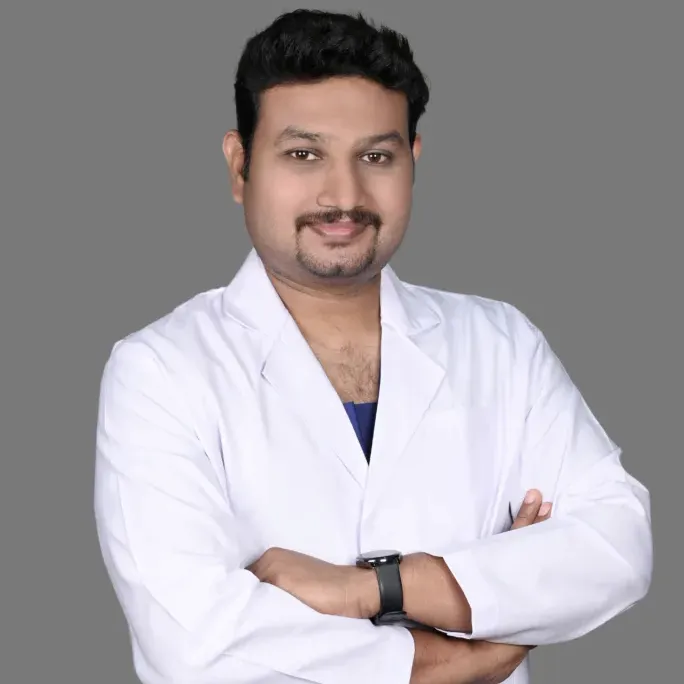
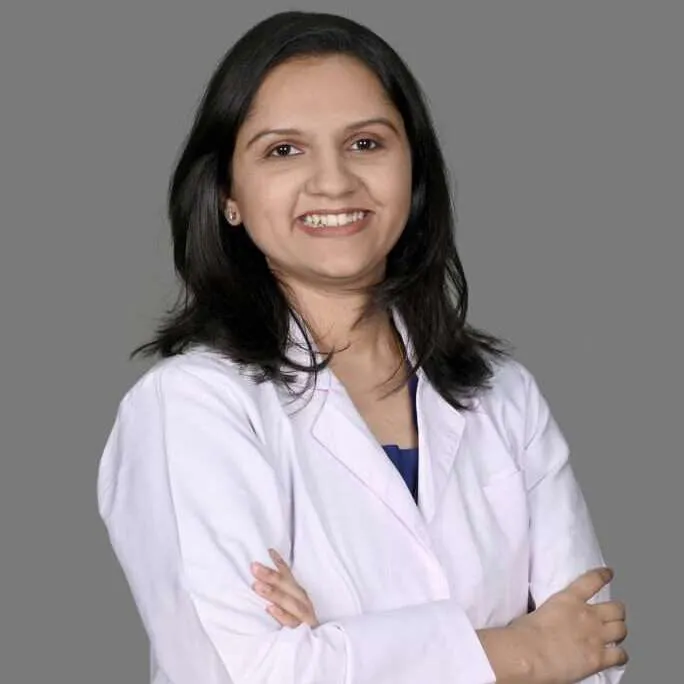
At our practice, Dr. Pradeep S. and Dr. Kalpa Pandya provide comprehensive care for patients experiencing complex jaw joint disorders. As specialists in oral & maxillofacial surgery (OMFS), they focus on identifying the precise cause of your joint dysfunction. They offer a range of surgical options, from minimally invasive joint washouts to complex joint reconstruction, ensuring a tailored approach to your recovery.
Understanding TMJ Disorders and Why Jaws Lock
TMJ disorders can stem from various sources, including physical trauma, chronic teeth grinding, arthritis, or developmental issues. When the joint is severely damaged, it can lead to a condition known as TMJ ankylosis, where the joint bones fuse together with fibrous tissue or bone. This fusion results in a locked jaw, making it nearly impossible for a patient to open their mouth, speak clearly, or chew food properly — a restriction also seen in oral submucous fibrosis (OSMF).
Recognising the early warning signs of progressive joint damage can help you seek timely medical advice. Common indicators that your joint health may be deteriorating include:
Jaw Clicking: A popping or clicking sound when opening or closing the mouth, often accompanied by pain.
Limited Range: Inability to open the mouth fully, which can progress to a completely locked jaw over time.
Facial Pain: Persistent, dull aching around the ear, cheekbones, and the jaw joint itself.
Difficulty Chewing: Pain or discomfort while eating hard or chewy foods, forcing a shift to a soft diet.
Accurate Diagnosis Before Planning Jaw Joint Surgery
A successful surgical outcome begins with a detailed and precise diagnostic planning phase. Dr. Pradeep S. and Dr. Kalpa Pandya perform thorough clinical evaluations to assess the range of motion in your jaw and identify specific pain triggers. They work closely with diagnostic imaging specialists to obtain a clear view of the internal structures of your jaw joint.
We utilise advanced imaging techniques to map out your surgical plan before any procedure begins:
Clinical Assessment: Checking jaw deviation, measuring the maximum mouth opening, and palpating the joint muscles.
3D CT Scans: Providing detailed views of the bony structures to identify any fusion, bone spurs, or structural abnormalities.
MRI Scans: Visualising the soft tissues, particularly the articular disc, to check for displacement or tearing.
Treatment Mapping: Determining whether your condition requires a minimally invasive washout or an open joint reconstruction.
Minimally Invasive Option: TMJ Arthrocentesis
For patients experiencing severe pain, sudden locking, or limited mouth opening without complete bone fusion, a minimally invasive procedure called TMJ arthrocentesis is often highly effective. This technique involves washing out the joint space to remove inflammatory chemicals and release minor adhesions that restrict movement.
The procedure is performed under local anesthesia or light sedation, offering a quick recovery path with minimal discomfort:
Joint Lavage: Inserting sterile needles into the joint space to flush it with a sterile saline solution.
Debris Removal: Washing away microscopic tissue debris and inflammatory mediators that cause chronic pain.
Medication Delivery: Injecting lubricating agents or anti-inflammatory medications directly into the joint to facilitate smooth movement.
Rapid Relief: Patients often experience an immediate improvement in jaw mobility and a reduction in pain levels.
Complex Care: TMJ Ankylosis Release
When the jaw joint has completely fused due to bone or fibrous tissue growth, a more comprehensive procedure known as TMJ ankylosis release is required. This surgery involves removing the fused bone mass to recreate a functional joint space, allowing the jaw to move freely once again. Because this is a major structural surgery, it is carefully coordinated and performed at our affiliated Apollo or partner hospital.
Dr. Pradeep S. and Dr. Kalpa Pandya employ precise surgical steps to ensure a safe and stable outcome:
Ankylotic Mass Removal: Carefully resecting the fused bone to separate the lower jaw from the skull base.
Joint Reconstruction: Placing a barrier, such as a muscle flap or a graft, between the bones to prevent them from fusing together again.
Re-establishing Function: Ensuring the jaw can open to a functional width during the surgical procedure.
Physiotherapy Planning: Designing an immediate post-operative exercise routine to maintain the newly gained mobility.
What to Expect During Your Recovery and Rehabilitation
Recovery from jaw joint surgery depends on the complexity of the procedure performed. While patients undergoing arthrocentesis can usually return to normal activities within a few days, those recovering from an ankylosis release require a structured, longer-term rehabilitation plan. Dedicated jaw exercises are crucial to prevent the joint from stiffening during the healing process.
Our team provides detailed instructions to guide you through a smooth recovery journey:
Immediate Post-Op Phase: Expect mild swelling and soreness around the joint, which is managed with prescribed pain relief.
Dietary Adjustments: Transitioning from a liquid diet to a soft diet for several weeks to avoid putting stress on the healing joint.
Active Physiotherapy: Starting guided jaw-opening exercises shortly after surgery to build muscle strength and joint flexibility.
Long-Term Monitoring: Attending regular follow-up appointments to track your progress and ensure the joint remains mobile.
Consulting Our Dual-Surgeon Team in Chennai
When dealing with complex jaw joint issues, having the expertise of two dedicated oral & maxillofacial surgeons ensures a highly comprehensive approach to your care. Dr. Pradeep S. and Dr. Kalpa Pandya work collaboratively on every case, from the initial diagnostic scans through to the final stages of your physical rehabilitation. They combine their clinical experience to deliver precise, patient-focused surgical care.
Dr. Pradeep S. brings specialized expertise in complex head and neck surgeries, consulting at Apollo Main Hospital on Greams Road. Dr. Kalpa Pandya focuses on facial trauma and joint rehabilitation, also consulting at Apollo Main Hospital on Greams Road. Together, they provide a seamless treatment experience across Chennai. Patients travel to our practice from across Tamil Nadu and the wider South India region, and we warmly welcome outstation patients seeking reliable second opinions for complex jaw joint disorders.
What to expect
1Assessment & imaging
2Conservative care first
3Arthrocentesis or ankylosis release
4Joint reconstruction where needed
5Physiotherapy & recovery
TMJ surgery — watch & learn
From Tumor to Triumph: Teen's Jaw Surgery Journey
A teenage patient’s journey through jaw-tumour surgery and recovery with the Mouth Cancer Surgeons team.
TMJ surgery — patient guides
Doctor-written explainers — authored by one surgeon and medically reviewed by the other.
TMJ surgery in Chennai refers to surgical procedures performed to treat disorders of the temporomandibular joint, which connects your jaw to your skull. These procedures range from minimally invasive washouts like arthrocentesis to major reconstructive surgeries like ankylosis release, performed by our specialist surgeons, Dr. Pradeep S. and Dr. Kalpa Pandya.
How is TMJ arthrocentesis performed?
TMJ arthrocentesis is a minimally invasive procedure where sterile needles are inserted into the jaw joint space. The joint is flushed with saline to wash out inflammatory debris and release adhesions, followed by the injection of lubricating or anti-inflammatory medications to restore smooth jaw movement.
What is a TMJ ankylosis release?
A TMJ ankylosis release is an open surgery performed to treat a fused, locked jaw. The surgeon removes the fused bone or fibrous tissue that is preventing joint movement and reconstructs the joint space, often using a tissue graft to prevent the bones from fusing together again.
How much does TMJ surgery cost in Chennai?
The cost of TMJ surgery in Chennai varies widely depending on whether you need a minimally invasive arthrocentesis or a complex open ankylosis release. Other factors include hospital stay, diagnostic scans, and the type of anesthesia used. Our team helps coordinate with insurance providers at our partner hospitals to check for eligible coverage.
What is the recovery time after jaw joint surgery?
Recovery time depends on the surgery. For arthrocentesis, patients usually resume normal activities within 2 to 3 days. For a major ankylosis release, initial healing takes 2 to 4 weeks, but dedicated jaw physiotherapy must be continued for several months to maintain joint mobility.
How soon can I get an appointment for a TMJ consultation in Chennai?
You can schedule a consultation with Dr. Pradeep S. or Dr. Kalpa Pandya at Apollo Main Hospital on Greams Road. We accommodate urgent requests and outstation patients seeking a second opinion as promptly as possible.
Is TMJ surgery performed under general anesthesia?
Minimally invasive procedures like arthrocentesis can be performed under local anesthesia or conscious sedation. Major surgeries, such as TMJ ankylosis release, are performed under general anesthesia in a fully equipped operating theatre at our partner hospitals.
What are the alternatives to jaw joint surgery?
Before recommending surgery, conservative treatments are always tried. These include physical therapy, custom-made nightguards or splints to prevent teeth grinding, pain-relieving medications, and dietary modifications to rest the jaw joint.
Who is a good candidate for locked jaw treatment?
A good candidate is someone experiencing severe jaw pain, persistent joint locking, or an inability to open their mouth that has not improved with conservative treatments like medication, splints, or physical therapy.
TMJ surgery in Chennai
Our practice serves patients seeking advanced jaw joint care across Chennai, including Greams Road, Nungambakkam, and Guindy, with diagnostic and surgical services coordinated through our partner hospitals.
Discuss tmj surgery
Request a consultation and choose your preferred hospital. Enquiries are triaged and you are directed to the most suitable surgeon and hospital.