Locked Jaw: Causes & When to See a Surgeon in Chennai

Need expert consultation? Book an appointment with Dr. Pradeep S. or Dr. Kalpa Pandya.
Book AppointmentWaking up to find you cannot fully open your mouth can be an alarming experience. This condition, colloquially known as a locked jaw and medically referred to as trismus, affects thousands of individuals. While some may experience a transient stiffness that resolves with gentle movement, others face a persistent, painful restriction that interferes with eating, speaking, and basic oral hygiene.
Understanding locked jaw causes and when to see a surgeon is critical to preventing long-term joint damage, nutritional deficiencies, and permanent restriction. In our clinical practice at Mouth Cancer Surgeons in Chennai, we frequently consult with patients who have ignored early warning signs, only to require complex surgical intervention later.
This guide outlines the anatomical triggers behind a locked jaw, the diagnostic processes used by specialists, and the clear indicators that tell you when it is time to seek the expertise of an oral and maxillofacial surgeon.
What is a Locked Jaw? Trismus vs. Lockjaw
To address jaw restriction, we must first clarify the medical terminology. Patients often use the terms "locked jaw" and "lockjaw" interchangeably, but in the medical community, they represent distinct clinical entities.
Clinical Trismus
Trismus refers to any restriction in the normal range of motion of the jaw. Under normal conditions, a healthy adult can open their mouth between 35 to 55 millimeters, which roughly translates to the width of three fingers aligned vertically. When this opening drops below 35 millimeters, it is classified as trismus. Trismus is typically localized, arising from issues within the temporomandibular joint (TMJ), the surrounding masticatory muscles, or the mucosal lining of the oral cavity.
Tetanus (Lockjaw)
Historically, the term "lockjaw" was synonymous with tetanus—a serious, potentially life-threatening bacterial infection caused by Clostridium tetani. The toxin produced by this bacteria targets the nervous system, leading to severe, painful muscle spasms throughout the body, frequently starting in the masseter muscles of the jaw. Thanks to widespread vaccination programs, classic tetanus-induced lockjaw is rare today. Most modern cases of a "locked jaw" are mechanical, inflammatory, or pathological in nature, rather than infectious.
Classifying Locked Jaw Causes: From TMJ to Deep Tissue Fibrosis
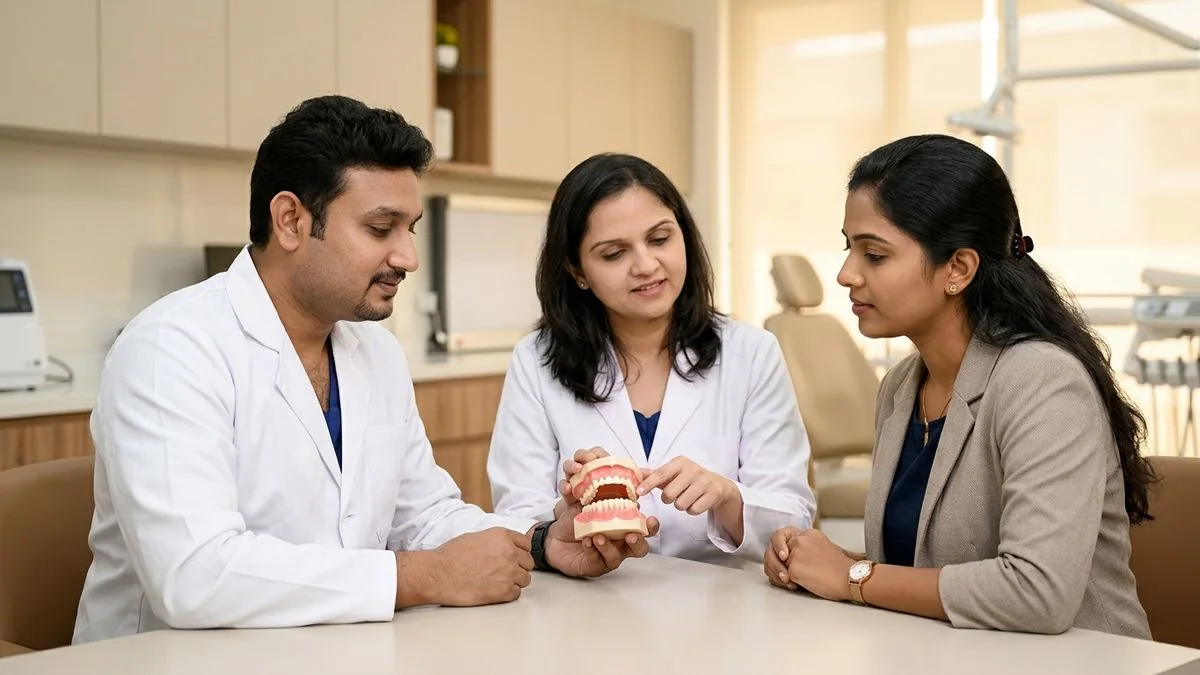
When evaluating a patient with limited mouth opening at our Chennai clinics, we categorize the underlying causes into three primary anatomical domains: articular (within the joint), extra-articular (outside the joint), and systemic. Identifying the precise origin of the restriction is the first step toward successful management.
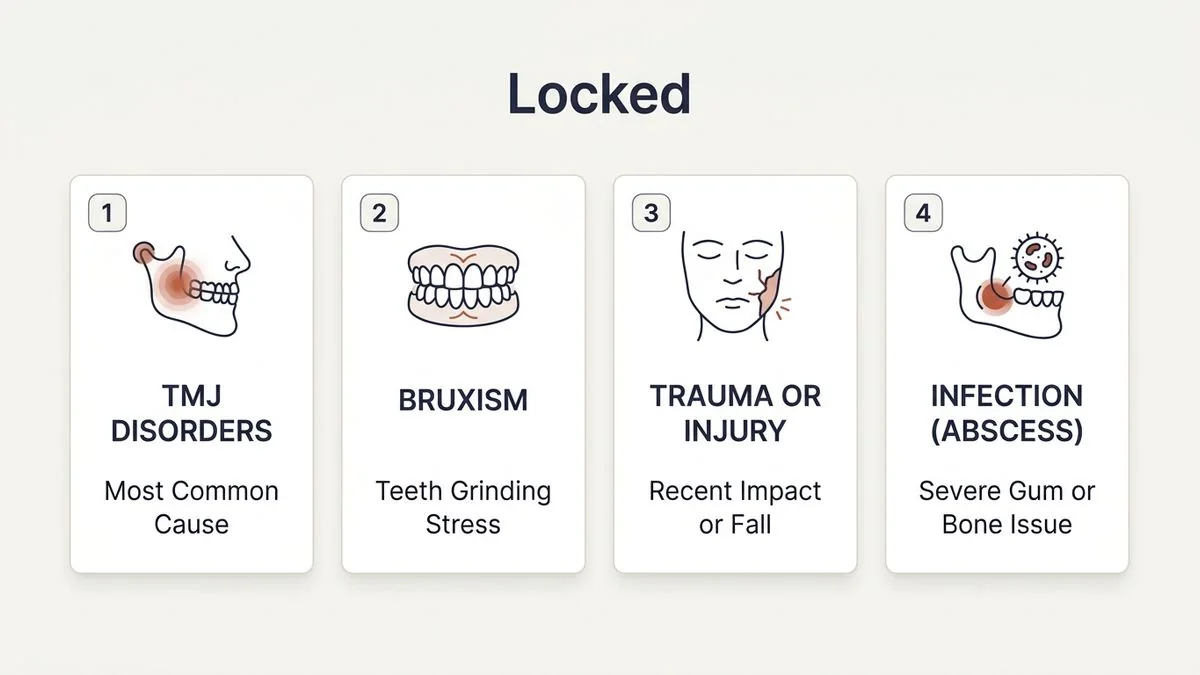
1. Temporomandibular Joint (TMJ) Disorders
The TMJ is a complex, bilateral ginglymoarthrodial joint that allows for both rotational (hinging) and translational (sliding) movements. A delicate cartilaginous disc sits between the temporal bone of the skull and the condyle of the lower jaw (mandible), cushioning the movement.
-
Internal Derangement with Reduction: The disc slips out of place (usually forward) when the jaw is closed. As you open your mouth, the disc pops back into place, often accompanied by a clicking or popping sound.
-
Internal Derangement without Reduction: This is a primary culprit behind an acute locked jaw. The disc slips forward and becomes physically bunched up in front of the condyle, acting as a structural barrier. The condyle cannot slide forward, leaving the jaw "locked" in a partially closed position, usually with an opening restricted to 20-25 millimeters.
-
TMJ Ankylosis: In chronic cases, particularly those involving unresolved trauma or severe infection, the joint can undergo bony or fibrous fusion (ankylosis), completely freezing the jaw in place.
2. Oral Submucous Fibrosis (OSMF)
In South India, and across Tamil Nadu, Oral Submucous Fibrosis is a highly prevalent extra-articular cause of progressive jaw restriction. Driven primarily by the chronic use of areca nut (betel nut), gutka, and pan masala, OSMF is an oral potentially malignant disorder (OPMD).
The chemical compounds in areca nut stimulate mucosal fibroblasts to produce excessive collagen while simultaneously inhibiting its breakdown. This results in the formation of dense, inelastic fibrous bands within the cheeks (buccal mucosa) and pterygomandibular raphe. Over months or years, these bands contract, slowly pulling the jaw shut and leading to severe, chronic trismus.
3. Maxillofacial Trauma and Fractures
An acute locked jaw following an impact to the face, sports injury, or road traffic accident is a surgical emergency.
-
Mandibular Fractures: A fracture of the condyle, angle, or body of the mandible disrupts the mechanical alignment of the jaw, causing immediate muscle splinting (spasms) and physical locking.
-
Zygomatic Arch Fractures: The cheekbone (zygoma) sits directly over the coronoid process of the mandible. If the zygomatic arch is fractured and depressed inward, it can physically impinge on the coronoid process, mechanically blocking the jaw from opening.
4. Severe Odontogenic Infections
Infections arising from deep dental decay, failed root canals, or impacted wisdom teeth can spread into the deep fascial spaces of the head and neck.
Infections in the submasseteric, pterygomandibular, or lateral pharyngeal spaces cause intense inflammation of the masticatory muscles (the masseter and medial pterygoid). This inflammation triggers protective muscle guarding and severe spasms, locking the jaw shut to prevent further movement of the inflamed tissues.
Recognizing Lockjaw Symptoms: When is it an Emergency?
While mild jaw stiffness from stress-induced teeth grinding (bruxism) can often be managed with warm compresses and a nightguard, certain symptoms demand immediate medical evaluation.
If your locked jaw is accompanied by any of the following red flag symptoms, seek emergency maxillofacial care:
| Symptom Severity | Accompanying Signs | Potential Underlying Condition | Recommended Action |
|---|---|---|---|
| Emergency | High fever, rapid facial swelling, difficulty swallowing or breathing, severe pain when resting. | Deep fascial space infection (Ludwig's Angina / Parapharyngeal Abscess). | Immediate emergency room visit / Maxillofacial consultation. |
| Urgent | History of recent facial trauma, visible facial asymmetry, bleeding from the mouth or nose. | Mandibular or zygomaticomaxillary complex fracture. | Maxillofacial evaluation within 24 hours. |
| Urgent | Sudden, painful "pop" followed by an immediate inability to open past 20mm; jaw shifted to one side. | Acute TMJ disc displacement without reduction. | Consultation with an oral surgeon within 48-72 hours. |
| Progressive | Gradual loss of mouth opening over months, burning sensation when eating spicy food, pale mucosal bands. | Oral Submucous Fibrosis (OSMF) / Precancerous changes. | Scheduled consultation with an OPMD specialist. |
If you are experiencing any of these urgent or progressive symptoms, early intervention is vital. Book a comprehensive evaluation with Dr. Pradeep S. and Dr. Kalpa Pandya at Apollo Main Hospital, Greams Road, Chennai.
Diagnostic Approach: How Maxillofacial Surgeons Evaluate Jaw Restriction
At Mouth Cancer Surgeons, we utilize a structured, multi-step diagnostic protocol to pinpoint the exact structural or pathological cause of your restricted mouth opening. Our dual-surgeon model ensures that both Dr. Pradeep S. and Dr. Kalpa Pandya review complex cases, combining their expertise in oncology, joint pathology, and reconstructive surgery.
1. Detailed Clinical History
We begin by exploring the timeline of your symptoms. Did the lock occur suddenly, or has it been developing over several years? We screen for habits such as teeth grinding, clenching, or the use of smokeless tobacco and betel nut. We also review any history of facial trauma, dental procedures, or radiation therapy to the head and neck.
2. Physical Examination and Range of Motion (ROM)
We precisely measure your maximum interincisal opening (MIO) using a calibrated Therabite scale or sliding caliper. We also assess lateral (side-to-side) and protrusive (forward) movements of the jaw.
-
Palpation: We palpate the temporomandibular joints and the primary muscles of mastication (masseter, temporalis, medial and lateral pterygoids) to identify areas of tenderness, trigger points, or muscle hypertrophy.
-
Joint Sounds: We listen for clicking, popping, or crepitus (a grating sound indicative of bone-on-bone contact or advanced arthritis).
-
Intraoral Exam: We inspect the cheeks for the pale, blanching fibrous bands characteristic of Oral Precancer (OPMD), check for dental infections, and look for signs of wear on the teeth from chronic grinding.
3. Advanced Diagnostic Imaging
Clinical examination alone cannot visualize the internal structures of the TMJ or deep tissue changes. We rely on targeted imaging modalities:
-
Orthopantomogram (OPG): A panoramic X-ray that provides a broad overview of the teeth, jawbones, and condyles, helping us quickly rule out fractures, dental abscesses, or gross bony changes.
-
Magnetic Resonance Imaging (MRI): The gold standard for TMJ evaluation. MRI allows us to visualize the soft tissues, specifically the position, shape, and integrity of the cartilaginous disc in both open and closed mouth positions.
-
Computed Tomography (CT) / CBCT: Essential for assessing bony pathology, complex fractures, or suspected TMJ ankylosis (fusion of the joint).
How Is a Locked Jaw Treated?
Treatment depends entirely on the cause, which is why an accurate diagnosis comes first. In broad terms:
-
Muscle spasm / early TMJ problems usually settle with conservative care — anti-inflammatories, a night splint and guided jaw exercises.
-
A trapped TMJ disc that won't release may need a minimally invasive joint washout (arthrocentesis).
-
A fused joint (TMJ ankylosis) needs surgery to free and reconstruct the joint — covered in detail on our TMJ surgery page.
-
OSMF fibrous bands are released surgically — see OSMF release surgery.
-
A jaw fracture is realigned and fixed — see facial fracture (ORIF) surgery.
For the full picture of jaw-joint disorders and how we manage them, visit our TMJ & jaw disorders page. The important thing: a locked jaw rarely fixes itself, and the right treatment is very different depending on the cause — so get it assessed.
When to See an Oral & Maxillofacial Surgeon for a Locked Jaw
Knowing when to transition from conservative care (like seeing your general dentist or using warm compresses) to consulting a specialist surgeon can prevent irreversible joint damage. You should schedule a consultation with an oral and maxillofacial surgeon if you experience any of the following:
-
Inability to Open Past Two Fingers: If your mouth opening has dropped below 30mm and does not improve within a week of rest and soft diet.
-
A History of Facial Impact: Any jaw stiffness or locking that develops after a fall, sports collision, or motor vehicle accident.
-
Progressive, Painless Restriction: If your jaw is slowly tightening over months, especially if you have a history of chewing betel nut, gutka, or smoking. This could indicate Oral Precancer (OPMD) or Maxillofacial Tumours requiring urgent biopsy.
-
Persistent Joint Clicking with Pain: While silent clicking is common, clicking accompanied by pain, headaches, or episodes of the jaw "catching" or locking temporarily is a sign of progressive TMJ internal derangement.
-
Unresolved Dental Pain and Swelling: If a toothache is accompanied by a gradual tightening of your jaw, it indicates a spreading infection that requires surgical drainage and management.
Talk to a Specialist in Chennai
A locked jaw rarely fixes itself, and the right treatment depends entirely on the cause — so early diagnosis matters. At Mouth Cancer Surgeons, Dr. Pradeep S. and Dr. Kalpa Pandya jointly assess and treat jaw restriction at Apollo Main Hospital, Greams Road, Chennai.
If your jaw is stuck, painful, or slowly tightening, book an appointment for an evaluation.
References
-
Al-Moraissi, E. A., et al. "Is arthrocentesis plus hyaluronic acid injection more effective than arthrocentesis alone in the treatment of temporomandibular joint osteoarthritis? A systematic review." Journal of Cranio-Maxillofacial Surgery, 2018.
-
Ray, J. G., et al. "Oral submucous fibrosis: A contemporary narrative review on pathogenesis and management." Journal of Oral and Maxillofacial Pathology, 2021.
-
National Comprehensive Cancer Network (NCCN). "Head and Neck Cancers Guidelines." 2025. NCCN Guidelines
-
World Health Organization (WHO). "Classifying Oral Potentially Malignant Disorders (OPMDs)." IARC Scientific Publications, 2020.
-
Dimitroulis, G. "The role of surgery in the management of temporomandibular joint disorders: A review." Australian Dental Journal, 2018.
Next step
Concerned about a symptom you read here? Get a specialist opinion in Chennai.
Dr. Pradeep S. and Dr. Kalpa Pandya consult at Apollo Hospitals, Greams Road. Same-day responses on WhatsApp for most enquiries.

Dr. Pradeep S.
MDS (OMFS) · FHNS · FIBCSOMS

Dr. Kalpa Pandya
MDS (OMFS) · FHNS — Head & Neck Oncology
Authored by
Medically reviewed by