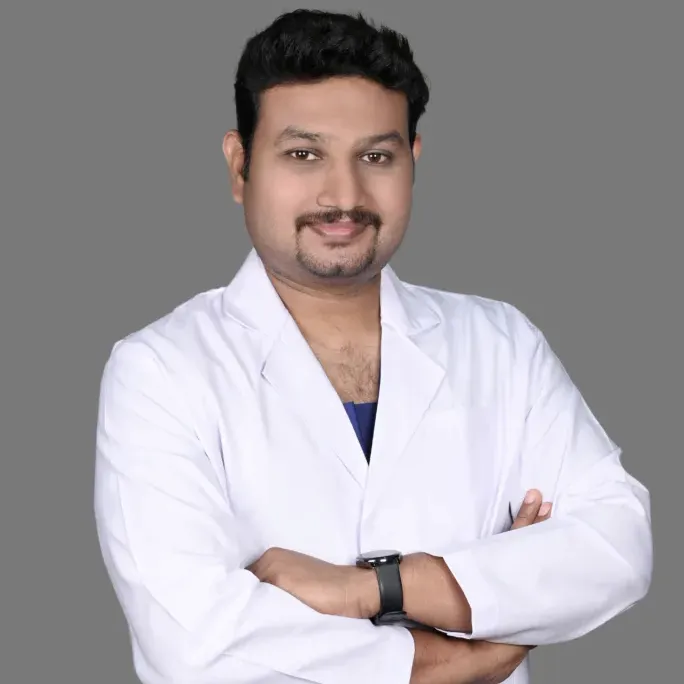
Apollo Main Hospital, Greams Road, Thousand Lights, Chennai · Dr. Pradeep S. & Dr. Kalpa Pandya
Hard palate cancers include squamous cell carcinoma and minor salivary gland cancers. Maxillectomy with clear margins, followed by an obturator or flap to close the defect, restores speech and swallowing.
Finding an ulcer or swelling on the roof of your mouth, or noticing that your upper denture no longer fits, can be unsettling. Many palate lumps are harmless, but some are cancers, and an early diagnosis usually means a smaller operation and an easier recovery.
The palate has two parts. The hard palate at the front is bony and forms part of the mouth (oral cavity). The soft palate at the back is muscle and belongs to the throat (oropharynx). This page is about cancer of the hard palate, which is treated mainly with surgery. Soft palate cancer is staged and treated differently, often with radiotherapy — our guide to mouth cancer vs throat cancer explains the difference.
Hard palate tumours fall into two main groups, and the difference matters for treatment:
Squamous cell carcinoma: Cancer of the surface lining, the most common type of oral cancer overall. It is strongly linked to tobacco and usually appears as an ulcer or a red or white patch.
Minor salivary gland tumours: The palate contains many small salivary glands, and tumours can arise from them. Some are benign, such as pleomorphic adenoma; others are cancers, such as adenoid cystic carcinoma and mucoepidermoid carcinoma. They often appear as a smooth, painless swelling under normal-looking lining and are less clearly linked to tobacco.
Adenoid cystic carcinoma tends to spread along nerves, so imaging and surgical planning pay particular attention to the nerves of the palate. Our guide to types of oral cancer covers the less common types as well.
Signs and Symptoms of Palate Cancer
Palate cancer can sometimes be caught early because the roof of the mouth is easy to see, but a tumour under smooth lining can go unnoticed. Signs to look out for include:
An ulcer or growth on the roof of the mouth: A sore, lump, or red or white patch that has not healed within two to three weeks.
A painless swelling on the palate: A firm lump under smooth lining, typical of a minor salivary gland tumour.
Loosening of upper teeth or an upper denture that no longer fits: These can mean the bone of the upper jaw is involved.
Bleeding from the palate or nose: Bleeding from the lesion, or blood in the nose if the tumour reaches the nasal floor.
Nasal blockage or numbness of the upper lip or cheek: These suggest spread towards the nose, sinus or nerves.
Diagnosis confirms what the tumour is and how far it extends into bone, sinus and nerves.
Biopsy
A biopsy under local anaesthetic confirms whether the lesion is a squamous cell carcinoma, a salivary gland tumour or something benign. For a swelling under intact lining, the sample is taken so that it does not complicate later surgery. See our oral cancer biopsy guide.
Scans
CT shows whether the bone of the palate and upper jaw is eroded; MRI shows soft tissue extent, sinus involvement and spread along nerves. PET-CT may be used for larger or high-grade tumours. Our guide to PET-CT vs MRI vs CT for oral cancer explains why.
Neck assessment
The neck lymph nodes are examined and scanned. Spread to the neck is less common from early hard palate cancers than from tongue cancers, but it changes treatment when present.
Palate Cancer Surgery: Maxillectomy
Surgery is the main treatment for hard palate cancer. The operation, called a maxillectomy, removes the tumour together with the part of the palate and upper jaw it involves, with a margin of healthy tissue. Our maxillectomy surgery page describes it in more detail.
Wide excision or partial maxillectomy: For small tumours, the affected part of the palate and the tooth-bearing ridge above it are removed, leaving the rest of the upper jaw intact.
Subtotal maxillectomy: For larger tumours, the palate and the floor of the sinus are removed, keeping the floor of the eye socket.
Total maxillectomy: For tumours that fill the sinus, one whole side of the upper jaw is removed.
Neck dissection when indicated: The neck lymph nodes are removed when scans show spread, or for larger or high-grade tumours with a higher risk of hidden spread. See neck dissection surgery.
During surgery, margins are checked so that the cancer is fully removed — our guide to positive margins and frozen section explains what this means.
Closing the Palate: Obturator or Flap Reconstruction
Removing part of the hard palate leaves an opening between the mouth and the nose or sinus. Without closing it, food and drink pass into the nose and speech sounds nasal. There are two ways to close it:
Obturator: A custom prosthetic plate, like an upper denture with an extension that seals the opening. A temporary obturator is usually fitted at the time of surgery so you can swallow and speak soon afterwards, and a definitive one is made by the prosthodontist once healing is complete. An obturator can be removed to clean and to check the area during follow-up.
Flap reconstruction: For larger defects, tissue is moved to close the opening permanently — a local flap, or a free flap such as a radial forearm or fibula flap carried out with our reconstructive colleague. A bony flap can later support implants.
The choice depends on the size of the defect, your general health, whether radiotherapy is planned and your own preference, and is agreed before surgery. Dental rehabilitation, including implants where suitable, is planned with Dr. Kalpa Pandya, whose interests include implant rehabilitation — see dental implants after oral cancer.
Radiotherapy After Palate Cancer Surgery
Small hard palate cancers removed with clear margins often need no further treatment. Radiotherapy is advised after surgery for features such as close or positive margins, spread along nerves (common with adenoid cystic carcinoma), high-grade tumours or lymph node spread, sometimes with chemotherapy for the highest-risk features.
Most patients eat a soft diet within days of surgery. With a well-fitting obturator or a healed flap, speech and swallowing usually return close to normal, though the first weeks involve adjustment, and the obturator may need refitting as the area heals and swelling settles.
Palate Cancer Surgery in Chennai: What to Expect at Apollo Main Hospital, Greams Road
Your care is led by Dr. Pradeep S., an oral and maxillofacial surgeon with a fellowship in head and neck surgical oncology (FHNS), international board certification (FIBCSOMS) and more than 15 years of experience in oral cancer surgery, including three years in the Department of Head and Neck Oncology at Apollo Proton Cancer Centre. He works with Dr. Kalpa Pandya, and both consult at Apollo Main Hospital, Greams Road. Radiation and medical oncologists, pathologists, prosthodontists and speech therapists join in your care where needed.
Patients travel to us from other parts of Tamil Nadu, West Bengal and Bangladesh. You can send your reports and scans for a remote second opinion before you travel, and Dr. Pradeep S. consults in English, Tamil, Hindi, Telugu and Bengali.
To discuss your diagnosis, call +91 96633 03747 or book a consultation at Apollo Main Hospital, Greams Road.
Finding us in Chennai
Mouth Cancer Surgeons is the practice of Dr. Pradeep S. and Dr. Kalpa Pandya, who consult at Apollo Main Hospital, Greams Road, Chennai. Patients come to us for palate cancer treatment from across Tamil Nadu, West Bengal and Bangladesh, and we offer remote review of reports and scans for those who need to plan travel.
Frequently asked questions
What is the difference between hard palate and soft palate cancer?
Hard palate cancer is on the bony front part of the roof of the mouth and is an oral cavity cancer, treated mainly with surgery. Soft palate cancer is on the muscular back part and is an oropharyngeal (throat) cancer, often treated with radiotherapy or chemoradiation.
Is every lump on the roof of the mouth cancer?
No. Many palate lumps are harmless — a bony torus, a denture sore or a benign salivary gland tumour such as a pleomorphic adenoma. A swelling or ulcer that persists or grows should still be examined and, if needed, biopsied, because some salivary gland tumours of the palate are cancers.
Is palate cancer curable?
Yes, hard palate cancer is often curable, particularly when found early. Small tumours removed with clear margins frequently need no further treatment. Larger tumours, or those with high-risk features, need bigger surgery and often radiotherapy, and many are still treated with the intent to cure.
What is a maxillectomy?
A maxillectomy is surgery that removes part or all of the upper jaw, including the palate, to remove a tumour with a margin of healthy tissue. It can be partial, subtotal or total depending on how far the tumour extends.
What is an obturator after maxillectomy?
An obturator is a custom prosthetic plate, similar to an upper denture, with an extension that seals the opening left in the palate. It stops food and liquid entering the nose and restores clearer speech. A temporary one is usually fitted at surgery and a definitive one made after healing.
Will my speech and swallowing be normal after palate surgery?
Most patients regain near-normal speech and swallowing once the palate is sealed with a well-fitting obturator or a healed flap. There is a period of adjustment in the first weeks, and speech therapy helps if speech remains nasal.
Obturator or flap — which is better?
Neither is better for everyone. An obturator allows quick recovery and easy inspection of the area, and suits smaller defects. A flap closes the opening permanently and can suit larger defects or patients who would struggle with a prosthesis. The choice is made with you before surgery.
Will I need radiotherapy after palate cancer surgery?
Only if the pathology report shows high-risk features, such as close or positive margins, spread along nerves, a high-grade tumour or lymph node spread. Radiotherapy is given by a radiation oncologist as part of one agreed plan.
How long is the hospital stay after palate cancer surgery?
Often a few days after a partial maxillectomy with an obturator, and longer — commonly a week or more — after free flap reconstruction or neck dissection.
What does palate cancer treatment cost in Chennai?
The cost depends on the extent of maxillectomy, the type of closure, any neck dissection, the hospital stay and whether radiotherapy is needed. You receive an estimate once your biopsy and scans are reviewed; confirm insurance coverage with your insurer and the hospital insurance desk before admission.
Who treats palate cancer at Mouth Cancer Surgeons?
Dr. Pradeep S. (Consultant, Oral & Maxillofacial Surgeon — specialist in oral, head and neck cancer surgeries) and Dr. Kalpa Pandya (Consultant, Oral & Maxillofacial Surgeon — specialist in OPMD, Facial Trauma, Dental Implants). You are cared for by the same two specialists from diagnosis through recovery.
Where do you consult in Chennai?
We consult and operate at Apollo Main Hospital, Greams Road.