Stage 4 Mouth Cancer: Can It Be Cured? Treatment & Outlook
Need expert consultation? Book an appointment with Dr. Pradeep S. or Dr. Kalpa Pandya.
Book AppointmentA stage 4 diagnosis brings the same questions to almost every family: is it curable, what are the options, and what comes next?
Stage 4 mouth cancer is not one situation. In oral cavity cancer, stage 4 includes locally advanced tumours that have grown into the jawbone or spread to neck lymph nodes but have not travelled to distant organs (stage 4A). Many of these are still treated with the aim of cure. It also includes more advanced tumours (4B) and cancer that has spread to distant organs (4C), where treatment aims at control and comfort. This guide explains the difference, the treatment options for each, and what published studies say about outlook. For the full staging system see oral cancer stages explained.
Stage 4 Mouth Cancer: The Three Subgroups
Staging follows the AJCC (American Joint Committee on Cancer) 8th edition TNM system: the primary tumour (T, including depth of invasion), nodes in the neck (N) and distant spread (M). In oral cavity cancer (tongue, cheek lining, floor of mouth, gums, hard palate, lip), stage 4 has three subgroups.
Stage 4A (Locally Advanced, Usually Operable)
This is either a T4a tumour, which has grown through the cortical bone of the lower or upper jaw, into the maxillary sinus or into the facial skin, or a smaller tumour with more extensive neck node involvement (N2: a node larger than 3 cm, several nodes on one side, or nodes on both sides).
- Resectability: Usually surgically resectable.
- Goal: Treated with curative intent, most often surgery followed by radiation or chemoradiation.
Stage 4B (Very Advanced Locally)
This is a T4b tumour, which has invaded the masticator space, pterygoid plates or skull base, or encases the internal carotid artery, or any tumour with N3 nodes (larger than 6 cm, or showing extranodal extension on clinical examination).
- Resectability: T4b disease is generally considered unresectable. Stage 4B is a mixed group, though, and whether surgery is possible depends on the individual scans, so the decision is made case by case.
- Goal: Often definitive chemoradiation, sometimes with induction chemotherapy or a clinical trial, planned by the oncologists.
Stage 4C (Distant Metastatic Disease)
The cancer has spread beyond the head and neck (M1) to distant organs, most often the lungs, and less often the liver or bones.
- Resectability: Primary surgery is rarely indicated except for symptom control (palliative resection).
- Clinical Goal: Systemic therapy (chemotherapy, immunotherapy) and targeted radiation aimed at disease stabilization, symptom relief, and prolonging overall survival.
Sub-stage Comparison Matrix
| Clinical Stage | Primary Tumour (T) | Neck Nodes (N) | Distant Spread (M) | Resectability | Primary Treatment Intent |
|---|---|---|---|---|---|
| Stage 4A | T4a with N0 or N1, or T1 to T4a with N2 | N0 to N1 (with T4a), or N2 | M0 (No distant spread) | Usually resectable | Curative intent (surgery, then adjuvant radiation or chemoradiation) |
| Stage 4B | T4b with any N, or any T with N3 | Any N (T4b) or N3 | M0 (No distant spread) | Often unresectable; case by case | Definitive chemoradiation, systemic therapy or palliative care |
| Stage 4C | Any T | Any N | M1 (Distant organs involved) | Systemic | Systemic Immunotherapy / Chemotherapy / Palliative |
Can Stage 4 Mouth Cancer Be Cured? Curative vs. Palliative Intent
The honest answer depends on the subgroup. In oncology, "cure" usually means long-term remission with no detectable cancer, often judged at five years.
- Stage 4A can often be treated with curative intent. When the cancer is confined to the mouth and neck nodes, with no distant spread, wide surgical removal with reconstruction, followed by radiation or chemoradiation, gives a real chance of long-term control.
- Stage 4B and 4C focus on control and quality of life. When the disease is unresectable or has reached distant organs, treatment aims to hold the cancer back, relieve pain, protect speech and swallowing, and extend life.
What Published Studies Say
Figures vary between series. For stage IVA oral cancer treated with curative intent, published five-year survival is roughly 30% to 50%, depending on the site, depth of invasion, margins and whether the full adjuvant course is completed. For distant spread (stage 4C), long-term survival is uncommon, although immunotherapy has improved survival for some patients with recurrent or metastatic head and neck cancer in clinical trials.
These are published figures, not this practice's own results, and they cannot predict what will happen to one person. Survival at every stage is covered in is mouth cancer curable.
Advanced Surgical Options for Stage 4 Oral Cavity Cancer
For resectable stage 4A oral cancer, surgery is the main treatment. The operation has three parts: removing the tumour with clear margins, clearing the neck lymph nodes, and rebuilding the defect.
1. Wide Tumour Resection (Composite Resection)
Advanced tumours usually need a wide excision, often a composite resection, aiming for clear margins (generally at least 5 mm of healthy tissue on the pathology report).
- Mandibulectomy / Maxillectomy: If the cancer touches or invades the lower jaw (mandible) or upper jaw (maxilla), bone resection is necessary. This ranges from marginal mandibulectomy (shaving the outer bone layer) to segmental mandibulectomy (removing a full section of the jawbone).
- Glossectomy: For advanced tongue cancers, subtotal or total glossectomy may be required to clear deep muscular invasion.
2. Comprehensive Neck Dissection
Stage 4 oral cancers have a high risk of spread to the neck lymph nodes, so a neck dissection is part of the operation. Depending on the nodes, it removes some or all of levels I to V.
- It removes nodes that may carry cancer and gives the pathologist tissue for staging, including whether there is extranodal extension (ENE), which influences the need for post-operative chemoradiation.
- Learn more about node removal protocols in our article on when mouth cancer requires a neck dissection.
3. Microvascular Free Flap Reconstruction
Removing a large part of the jaw, tongue or cheek leaves a big defect that would affect swallowing, speech and facial shape. It is repaired with microvascular free tissue transfer (a free flap), done with a reconstructive colleague:
- Fibula Free Flap: A segment of the calf bone (fibula) along with its blood vessels is harvested, shaped to match the removed jawbone, and transplanted into the face. The blood vessels are reattached to neck arteries and veins under a surgical microscope.
- Anterolateral Thigh (ALT) Flap / Radial Forearm Free Flap (RFFF): Soft tissue and skin harvested from the thigh or forearm, ideal for reconstructing the tongue, cheek lining (buccal mucosa), or floor of the mouth.
The aim of reconstruction is to restore as much swallowing, speech and facial shape as possible. See our reconstructive surgery page and the article on fibula free flap jaw reconstruction.
Post-Surgical Adjuvant Therapies: Radiation, Chemotherapy & Immunotherapy
Surgery alone is often not enough for stage 4 mouth cancer. To lower the risk of recurrence, adjuvant (post-operative) therapy usually starts within about 4 to 6 weeks of surgery, once the wound has healed. Radiation and chemotherapy are planned and given by the radiation and medical oncologists, not by the surgeons.
1. Adjuvant Radiotherapy
The radiation oncologist directs high-energy X-rays (in some centres, proton beams) at the surgical bed and neck to destroy any remaining microscopic cancer cells. Techniques such as intensity-modulated radiotherapy (IMRT) shape the dose to spare nearby healthy tissue, the spinal cord and, as far as possible, the salivary glands. Typical side effects are covered in radiation side effects in mouth cancer.
2. Concurrent Chemoradiation
If the pathology report shows high-risk features, such as positive margins or extranodal extension (ENE), the medical oncologist usually adds chemotherapy (typically cisplatin) to the radiation. This is based on large adjuvant trials (Bernier et al. and Cooper et al., 2004) and acts partly by making the cancer cells more sensitive to radiation. Our article on radiation or chemo after oral cancer surgery explains how this is decided.
3. Targeted Therapy & Immunotherapy
For recurrent or metastatic disease, and sometimes with radiation in locally advanced disease:
- Cetuximab: blocks the epidermal growth factor receptor (EGFR), which is often overexpressed in oral squamous cell carcinoma. Bonner et al. (2006) showed it improved outcomes when added to radiation in locally advanced head and neck cancer.
- Pembrolizumab or nivolumab: PD-1 immune checkpoint inhibitors. In trials such as KEYNOTE-048 and CheckMate 141 they improved survival for some patients with recurrent or metastatic disease. Not everyone responds. See immunotherapy and targeted therapy for oral cancer.
Treatment planning across surgery and oncology is described on our multidisciplinary cancer care page.
Comparative Overview of Stage 4 Treatment Modalities
| Modality | Primary Indication | Main Goal | Key Benefits | Expected Recovery / Considerations |
|---|---|---|---|---|
| Radical Resection + Free Flap | Stage 4A (Resectable) | Complete surgical clearance of primary tumour | Main route to local cure; reconstruction in the same operation | Often 10–14 days in hospital; a temporary tracheostomy or feeding tube may be needed |
| Concurrent Chemoradiation | Post-surgery high-risk features OR Unresectable 4B | Treat remaining microscopic disease OR achieve primary local control | Non-surgical option for unresectable disease; chemotherapy adds to radiation effect | About 6–7 weeks of daily treatment; mucositis, fatigue and dry mouth are expected |
| Immunotherapy / Targeted | Stage 4C Metastatic OR Recurrent Disease | Control the disease and extend life | Different side-effect profile from conventional chemotherapy | IV infusions every 3 weeks or so; response checked with scans |
Been told your mouth cancer is stage 4? Dr. Pradeep S. and Dr. Kalpa Pandya see patients at Apollo Main Hospital, Greams Road, Chennai. Book a consultation or call +91 96633 03747 for a careful review of your scans and biopsy and a clear discussion of whether surgery is possible.
Functional Rehabilitation and Quality of Life After Surgery
Treating stage 4 mouth cancer is about more than the tumour. Speech, eating and appearance matter just as much to patients and families.
Speech and Swallowing Rehabilitation
Removing parts of the mouth affects speech and swallowing.
- Speech and swallowing therapy usually starts early after surgery, to retrain tongue movement and safe swallowing. See speech and swallowing therapy after oral surgery.
- When a tongue is rebuilt with a flap, it is shaped to keep as much height and contact with the palate as possible, which helps speech and eating.
Dental Rehabilitation & Implants
Chewing is often the last function to be restored.
- When the jaw is rebuilt with a fibula free flap, dental implants can sometimes be placed into the transplanted bone, once healing (and any radiation) is complete.
- Implant-supported bridges or dentures can then help many patients eat a more normal diet.
- See our dental implants page and the guide to dental implants after oral cancer treatment.
Why Teamwork Matters in Advanced Oral Cancer
Stage 4 operations can take many hours: wide excision, neck dissection, flap harvest, joining of tiny blood vessels under a microscope, and rebuilding the face and jaw. They go better with good coordination between teams.
When a free flap is needed, the cancer surgeons and the reconstructive colleague usually work in two teams. While the tumour is removed and the neck dissected, the flap (fibula or thigh) can be harvested at the same time, which helps keep operating time down. Radiation and medical oncologists, radiologists and pathologists contribute to the plan, and the surgeons stay involved through the hospital stay and follow-up.
Dr. Pradeep S. and Dr. Kalpa Pandya operate at Apollo Main Hospital, Greams Road, Chennai, as part of this team. More on our approach is on the oral cancer surgery page.
Life After Stage 4 Treatment: Follow-Up
The risk of recurrence is highest in the first two years, so follow-up is closest then: typically every 1 to 3 months in the first year and every 2 to 6 months in the second, then every few months until year 5 and yearly after that, with scans as your team advises. Our guide to oral cancer recurrence signs and follow-up gives the full schedule and the warning signs to watch for. If cancer does return, see advanced and recurrent mouth cancer options.
An Illustrative Treatment Pathway
The example below is a composite to show how a typical stage 4A pathway unfolds. It does not describe a specific patient or promise a particular result.
Presentation: A middle-aged man has a non-healing ulcerated mass on the left lower gum (alveolus) that has grown into the jawbone and floor of the mouth, with enlarged neck lymph nodes on the same side. Biopsy and imaging confirm Stage 4A squamous cell carcinoma (T4a N2b M0) with no distant spread.
Typical Treatment Plan: Surgery would usually involve a segmental mandibulectomy, removal of the involved floor of mouth and a neck dissection. A fibula free flap, harvested and joined by the reconstructive team, rebuilds the lower jaw, fixed with plates and screws.
What Follows: If pathology shows clear margins but high-risk features, the radiation and medical oncologists usually recommend about six weeks of post-operative radiation, with or without chemotherapy. Close surveillance follows, alongside speech, swallowing and dental rehabilitation.
Action Plan: Steps for Patients Diagnosed with Stage 4 Mouth Cancer
- Gather your reports: the biopsy and histopathology report, contrast MRI or CT of the face and neck, and a PET-CT if your doctor has advised one to check for distant spread.
- Get a head and neck surgical opinion on resectability and reconstruction. A second opinion is reasonable if you are unsure about the plan.
- Ask which treatment comes first: surgery, chemoradiation or systemic therapy, and why.
- Plan for rehabilitation before surgery: speech, swallowing, feeding tube care and, later, dental implants.
Consultation at Apollo Main Hospital, Greams Road, Chennai
Dr. Pradeep S. is an oral & maxillofacial surgeon with a fellowship in head & neck surgical oncology (FHNS), international board certification (FIBCSOMS) and over 15 years in oral, head and neck cancer surgery, including three years in head & neck oncology at Apollo Proton Cancer Centre. With Dr. Kalpa Pandya, he provides evaluation, cancer surgery (free-flap reconstruction with a reconstructive colleague) and long-term follow-up. Radiation and chemotherapy are planned with the hospital's oncologists. Patients from West Bengal and Bangladesh can start with a remote second opinion. For the wider picture, see our oral cancer treatment page.
- Location: Apollo Main Hospital, Greams Road, Chennai
- Phone: +91 96633 03747
- Online: Book a consultation
References
- National Comprehensive Cancer Network (NCCN). "NCCN Clinical Practice Guidelines in Oncology: Head and Neck Cancers" (current version). https://www.nccn.org
- Shah, Jatin P., et al. Jatin Shah's Head and Neck Surgery and Oncology. 5th Edition, Elsevier.
- Montero, P.H., & Patel, S.G. "Cancer of the oral cavity." Surgical Oncology Clinics of North America, 2015.
- Amin, M.B., et al. AJCC Cancer Staging Manual, 8th Edition. Springer, 2017.
- Bernier, J., et al. "Postoperative irradiation with or without concomitant chemotherapy for locally advanced head and neck cancer." New England Journal of Medicine, 350(19), 2004, pp. 1945-1952. Cooper, J.S., et al. New England Journal of Medicine, 350(19), 2004, pp. 1937-1944.
- Bonner, J.A., et al. "Radiotherapy plus cetuximab for squamous-cell carcinoma of the head and neck." New England Journal of Medicine, 354(6), 2006, pp. 567-578.
- Burtness, B., et al. "Pembrolizumab alone or with chemotherapy versus cetuximab with chemotherapy for recurrent or metastatic squamous cell carcinoma of the head and neck (KEYNOTE-048)." The Lancet, 394, 2019, pp. 1915-1928.
- Ferris, R.L., et al. "Nivolumab for Recurrent Squamous-Cell Carcinoma of the Head and Neck." New England Journal of Medicine, vol. 375, no. 19, 2016, pp. 1856-1867.
Next step
Concerned about a symptom you read here? Get a specialist opinion in Chennai.
Dr. Pradeep S. and Dr. Kalpa Pandya consult at Apollo Hospitals, Greams Road. Same-day responses on WhatsApp for most enquiries.
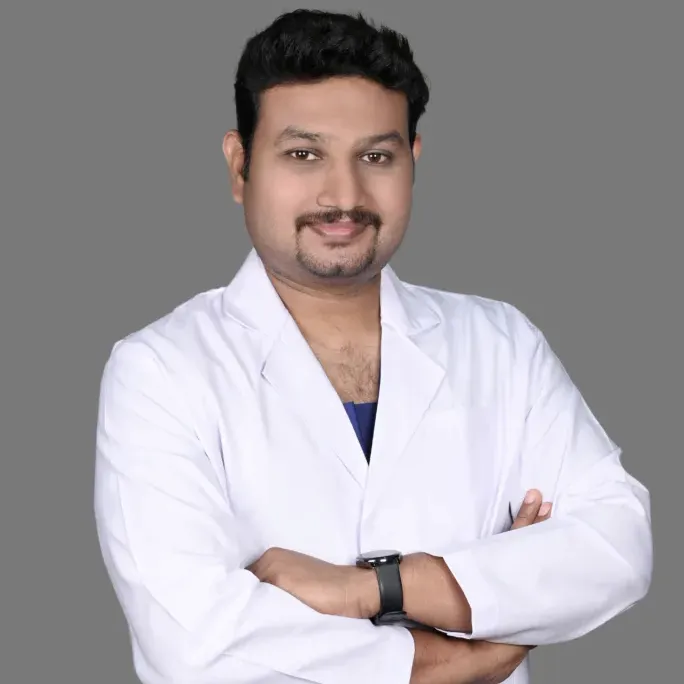
Dr. Pradeep S.
MDS (OMFS) · FHNS · FIBCSOMS

Dr. Kalpa Pandya
MDS (OMFS) · FHNS — Head & Neck Oncology
Authored by
Medically reviewed by