
Neck Dissection for Oral Cancer: Before & After in Chennai

Need expert consultation? Book an appointment with Dr. Pradeep S. or Dr. Kalpa Pandya.
Book AppointmentA diagnosis of oral cancer brings with it many questions, particularly when the treatment plan includes a surgical procedure known as a neck dissection. For many patients, the idea of undergoing surgery on the neck can feel overwhelming. Understanding why this procedure is necessary, how it is performed, and what the recovery process looks like is key to reducing anxiety and preparing for a successful outcome. If you are still deciding whether neck surgery is indicated, start with when mouth cancer needs a neck dissection. For the wider post-operative journey after oral cancer surgery, see the month-by-month recovery timeline.
In our Chennai-based practice, we focus on guiding patients through every step of this process with clarity and clinical precision. At Mouth Cancer Surgeons, led by Dr. Pradeep S. and Dr. Kalpa Pandya, we utilize a dual-surgeon model. This means the same two highly trained oral and maxillofacial surgeons plan your surgery, perform the procedure together, and manage your long-term recovery.
This guide provides a detailed overview of neck dissection for oral cancer what to expect before and after, helping you and your family prepare for the surgical journey ahead.
Understanding Neck Dissection: Why It Is Essential in Oral Cancer Care
Oral cancers, such as those affecting the tongue, buccal mucosa (inner cheek), floor of the mouth, or gums, have a well-documented tendency to spread through the lymphatic system. The lymph nodes in the neck act as filters, trapping cancer cells as they attempt to travel from the mouth to the rest of the body.
A neck dissection is a surgical procedure designed to remove these lymph nodes. It serves two primary purposes:
-
Therapeutic: To remove lymph nodes that are clinically or radiographically proven to contain cancer cells.
-
Prophylactic (Elective): To remove lymph nodes that appear normal on scans but carry a high risk of harboring microscopic, undetectable cancer cells (micrometastasis).
Removing these nodes is one of the most effective ways to control the regional spread of oral cancer and significantly improve long-term survival rates. According to clinical studies, addressing neck metastasis early remains a cornerstone of successful multidisciplinary cancer care.

Types of Neck Dissection
Not all neck dissections are the same. The extent of the surgery depends entirely on how far the cancer has spread, the location of the primary tumor, and the findings of pre-operative imaging (such as CT, MRI, or PET scans).
The neck is anatomically divided into six levels of lymph nodes (Levels I to VI). Surgeons select the appropriate type of dissection to balance cancer clearance with the preservation of vital structures.
| Type of Neck Dissection | Lymph Node Levels Removed | Key Structures Preserved | Common Indications |
|---|---|---|---|
| Selective Neck Dissection (SND) | Only specific levels at highest risk (e.g., Levels I-III for tongue cancer) | All non-lymphatic structures (SCM muscle, internal jugular vein, accessory nerve) | Early-stage oral cancer with no clinical sign of neck spread (N0 neck) |
| Modified Radical Neck Dissection (MRND) | Levels I-V | One or more non-lymphatic structures (typically the accessory nerve and internal jugular vein) | Limited cancer spread to the neck nodes without direct invasion of vital structures |
| Radical Neck Dissection (RND) | Levels I-V | None. The SCM muscle, internal jugular vein, and spinal accessory nerve are removed | Advanced neck metastasis with extensive nodal involvement and tissue invasion |
During your consultation at our clinic in Apollo Main Hospital, Greams Road, Chennai, we will explain which specific approach is safest and most effective for your unique diagnosis.
Before the Surgery: Pre-Operative Preparation and Assessment
Preparation for a neck dissection begins weeks before you enter the operating theatre. This phase is dedicated to ensuring your body is physically optimized to undergo anesthesia and heal efficiently.
1. Comprehensive Clinical and Imaging Assessments
Before scheduling surgery, we perform detailed imaging of your head and neck. This typically includes a high-resolution contrast-enhanced CT scan or an MRI to map the exact relationship between the primary oral tumor, the lymph nodes, and major blood vessels in the neck.
2. Multi-Specialty Medical Clearance
A successful outcome requires looking at the patient's overall health. Patients undergo:
-
Cardiology and Pulmonology Clearance: To ensure the heart and lungs can safely tolerate general anesthesia.
-
Anesthetic Evaluation: A thorough pre-anesthetic check-up (PAC) at Apollo Main Hospital to discuss your medical history, current medications, and any past experiences with anesthesia.
-
Nutritional Assessment: Because oral cancer can make eating difficult, optimizing your nutritional status before surgery is vital. A dietitian may recommend high-calorie, high-protein supplements to build your reserves.
3. Personal Preparations for the Patient
-
Tobacco and Alcohol Cessation: If you smoke, chew betel nut, or use tobacco in any form, you must stop immediately. Tobacco severely impairs wound healing, increases the risk of post-operative lung infections, and interferes with anesthesia.
-
Medication Adjustments: You will receive specific instructions regarding your daily medications. Blood thinners (like aspirin or clopidogrel) generally need to be stopped or transitioned under medical supervision several days before surgery.
-
Preparing Your Home: Set up a comfortable recovery space with extra pillows to keep your head elevated, which helps reduce post-operative facial and neck swelling.
The Surgical Procedure: What Happens in the Operating Theatre
A neck dissection is performed under general anesthesia, meaning you will be completely asleep and feel no pain during the procedure.
[Incision along Neck Crease]

         │

         ▼

[Exposure of Neck Levels (I-V)]

         │

         ▼

[Careful Dissection around Major Nerves & Vessels]

         │

         ▼

[Removal of Target Lymph Nodes & Primary Oral Tumor]

         │

         ▼

[Placement of Surgical Drains]

         │

         ▼

[Wound Closure & Reconstruction (if required)]
Step 1: Incision Placement
The surgeon makes an incision in the neck. We carefully plan these incisions along the natural skin creases of the neck (Langer's lines) whenever possible. This cosmetic planning ensures that once healed, the scar is discreet and blends naturally into the contours of your neck.
Step 2: Lymph Node Clearance
The surgeon systematically exposes the designated levels of the neck. Using precise surgical instruments, the lymph-node-bearing fatty tissue is carefully separated from vital structures such as the carotid artery, the internal jugular vein, and key nerves (such as the vagus, hypoglossal, and spinal accessory nerves).
Step 3: Addressing the Primary Tumor and Reconstruction
In most cases, the neck dissection is performed in conjunction with the removal of the primary oral cancer (such as a partial glossectomy for tongue cancer). If a large amount of tissue is removed, our reconstructive expertise comes into play. We may perform reconstructive and restorative surgery using local flaps or microvascular free tissue transfers (microvascular free flaps) to restore the form and function of your mouth and neck.
Step 4: Drains and Closure
Before closing the wound, one or two flexible plastic suction drains are placed under the skin of the neck. These drains are critical—they collect any blood or lymphatic fluid that accumulates in the surgical bed, preventing fluid collections (hematomas or seromas) that could compromise healing or put pressure on your airway. The skin is then closed using fine sutures or surgical staples.
Immediate Post-Operative Care: What to Expect in the Hospital
When you wake up from surgery, you will be in the Post-Anesthesia Care Unit (PACU) or the Intensive Care Unit (ICU) for close monitoring before being transferred to your hospital room.
1. The Presence of Tubes and Lines
It is completely normal to wake up with several supportive devices:
-
Surgical Drains: These thin tubes will emerge from your neck, connected to plastic collection bulbs.
-
Intravenous (IV) Line: To deliver fluids, pain medications, and antibiotics.
-
Urinary Catheter: To monitor your kidney function and fluid balance during and immediately after the long surgery.
-
Feeding Tube (Ryle's Tube): If your primary oral surgery makes swallowing difficult or unsafe in the first few days, a temporary feeding tube placed through the nose into the stomach will be used to provide nutrition.
2. Pain Management
Controlling your pain is our top priority. You will receive scheduled pain medications through your IV. It is important to communicate your discomfort levels honestly with the nursing staff so they can adjust your medication appropriately.
3. Position and Mobility
You will be instructed to rest with the head of your bed elevated at a 30 to 45-degree angle. This simple positional change uses gravity to minimize swelling in your face and neck. The nursing team will assist you in sitting up and taking short walks as early as the day after surgery to encourage healthy blood circulation and prevent lung complications.
4. Hospital Stay Timeline
For an uncomplicated neck dissection, the hospital stay typically ranges from 3 to 7 days. The primary factor determining your discharge is the output of your surgical drains. Once the fluid drainage decreases to a safe level (usually less than 20-30 ml over 24 hours), we will safely remove the drains in your hospital room—a quick and generally painless procedure.
Recovery at Home: Milestones and Care Tips
Transitioning back to your home environment in Chennai or surrounding areas requires a structured approach to wound care, nutrition, and physical rehabilitation.
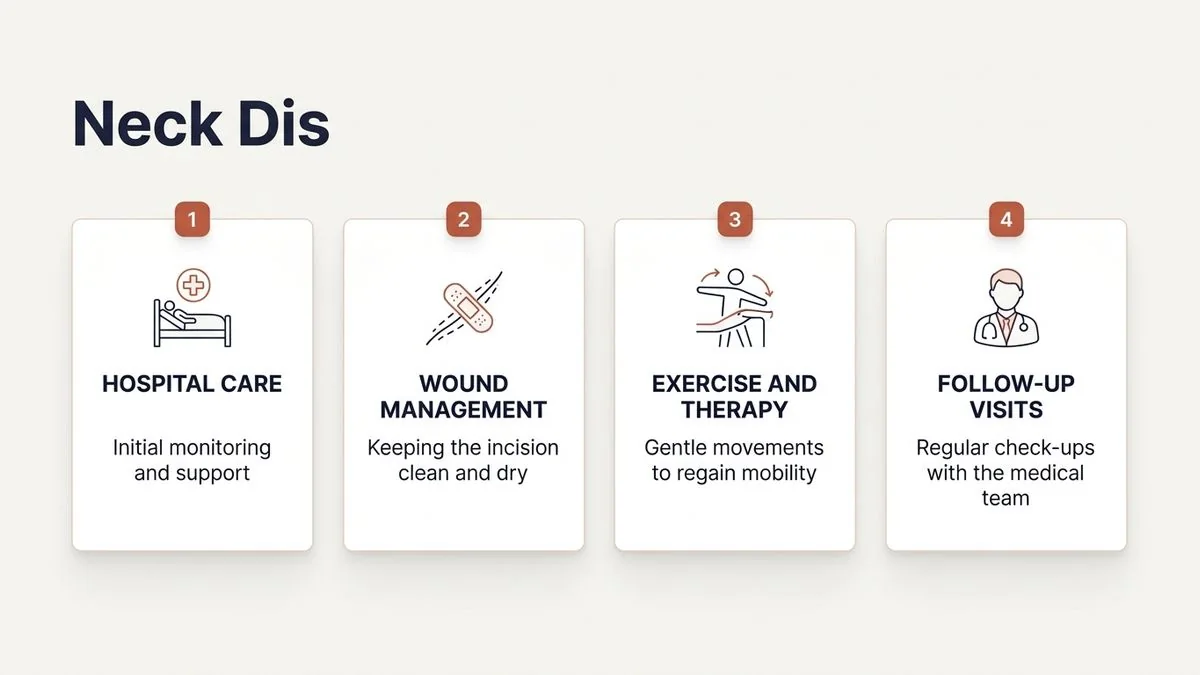
Wound Care and Hygiene
-
Keep it Dry: Keep your neck incision completely dry until the sutures or staples are removed (usually 7 to 10 days after surgery). You can take sponge baths or wash your hair backward with assistance.
-
Monitor for Infection: Inspect the wound daily. Contact us immediately at +91 96633 03747 if you notice spreading redness, increased warmth, sudden swelling, foul-smelling discharge, or if you run a fever above 101°F (38.3°C).
-
Scar Management: Once the sutures are removed and the skin is fully closed, we will guide you on scar care. Gently massaging the scar with a moisturizing cream or silicone gel helps soften the tissue and improves the cosmetic result over time.
Nutrition and Eating
-
Soft Diet: Start with soft, easy-to-chew foods that do not require intense jaw movement. Smoothies, pureed soups, yogurt, and well-cooked rice or dal are excellent choices.
-
Stay Hydrated: Drink plenty of water throughout the day. If swallowing feels uncomfortable, take small, frequent sips rather than large gulps.
Activity and Physical Therapy
-
Avoid Heavy Lifting: Do not lift anything heavier than 5 kg for at least 4 to 6 weeks. Avoid strenuous exercise, sudden neck twisting, or high-impact activities.
-
Neck and Shoulder Exercises: A neck dissection can cause stiffness in your neck and weakness in your shoulder, particularly if the spinal accessory nerve was handled during surgery. We will introduce gentle stretching exercises to preserve your range of motion.
Potential Side Effects and How to Manage Them
While a neck dissection is a highly successful cancer-control procedure, it can cause certain long-term or temporary side effects due to the delicate anatomy of the neck.
1. Numbness of the Neck and Ear
During the surgery, small sensory nerves that supply the skin of the neck and the lower part of the earlobe (such as the great auricular nerve) often have to be divided to clear the lymph nodes.
-
What to expect: You will likely experience numbness along your jawline, neck, and ear.
-
Management: This numbness is normal. Over 6 to 12 months, the sensation may partially return as microscopic nerve fibers regenerate. Be careful when shaving or applying hot/cold packs to avoid accidental burns or cuts on the numb skin.
2. Shoulder Stiffness and Weakness
The spinal accessory nerve controls the trapezius muscle, which allows you to shrug your shoulders and reach overhead. Even in selective neck dissections where this nerve is fully preserved, gentle stretching or manipulation during surgery can cause temporary nerve bruising (neuropraxia).
-
What to expect: Difficulty raising your arm above shoulder level, shoulder droop, or an aching sensation in the shoulder joint.
-
Management: Targeted physical therapy is highly effective. Starting gentle shoulder shrugs and arm circles as guided by our team prevents long-term joint stiffness (frozen shoulder).
3. Lymphedema
Removing lymph nodes disrupts the normal drainage of fluid from your face and neck, occasionally leading to localized swelling.
-
What to expect: Mild tightness or puffiness in the lower face or neck, which may be more pronounced in the mornings.
-
Management: Sleeping with your head elevated, performing gentle neck stretches, and avoiding tight collars or jewelry can significantly reduce this swelling.
If you are experiencing severe shoulder limitations or persistent swelling, early intervention is important. Book an appointment with Dr. Pradeep S. and Dr. Kalpa Pandya at Apollo Main Hospital, Greams Road, Chennai, for a comprehensive post-operative physical assessment.
Long-Term Surveillance and Follow-Up Care in Chennai
Completing your surgery is a major milestone, but long-term success relies heavily on consistent follow-up care. Oral cancer requires close monitoring to detect any signs of recurrence early and to manage any late-onset side effects of surgery or adjuvant therapies (such as radiation or chemotherapy).
The Dual-Surgeon Continuity Advantage
At Mouth Cancer Surgeons, we believe that continuity of care is vital for cancer patients. When you choose our practice, the same two surgeons—Dr. Pradeep S. and Dr. Kalpa Pandya—who performed your surgery will personally conduct your follow-up examinations. This deep, case-specific familiarity ensures that even the subtlest changes in your healing pattern or tissue texture are identified immediately.
Typical Follow-Up Schedule
-
First Month: Weekly visits to monitor wound healing, manage pain, and guide physical therapy.
-
First Year: Consultations every 4 to 6 weeks.
-
Second Year: Consultations every 2 months.
-
Years 3 to 5: Consultations every 3 to 6 months.
-
After 5 Years: Annual check-ups.
During these visits, we perform thorough physical examinations of your mouth and neck. We may also order periodic imaging studies (such as ultrasounds or CT scans) to ensure you remain cancer-free.
References
-
National Comprehensive Cancer Network (NCCN). "Clinical Practice Guidelines in Oncology: Head and Neck Cancers." NCCN Guidelines, 2025. NCCN
-
Ferlay, J., et al. "Cancer Incidence and Mortality Worldwide: Sources, Methods and Major Patterns in GLOBOCAN." International Journal of Cancer, 2021.
-
Shah, Jatin P., et al. "Patterns of Cervical Lymph Node Metastasis from Squamous Carcinomas of the Oral Cavity." American Journal of Surgery, 1990.
-
Robbins, K. Thomas, et al. "Consensus Statement on the Classification and Terminology of Neck Dissection." Archives of Otolaryngology–Head & Neck Surgery, 2008.
-
National Cancer Institute (NCI). "Lip and Oral Cavity Cancer Treatment (PDQ®)–Patient Version." NCI, 2024. National Cancer Institute
Next step
Concerned about a symptom you read here? Get a specialist opinion in Chennai.
Dr. Pradeep S. and Dr. Kalpa Pandya consult at Apollo Hospitals, Greams Road. Same-day responses on WhatsApp for most enquiries.

Dr. Pradeep S.
MDS (OMFS) · FHNS · FIBCSOMS

Dr. Kalpa Pandya
MDS (OMFS) · FHNS — Head & Neck Oncology
Authored by
Medically reviewed by