Speech and Swallowing Rehab After Oral Cancer Surgery in Chennai
Need expert consultation? Book an appointment with Dr. Pradeep S. or Dr. Kalpa Pandya.
Book AppointmentAfter oral cancer surgery, the question families ask most often is not only “is the cancer gone?” but “when can I eat and speak like myself again?” Families who start searching for speech therapy or feeding-tube weaning are usually already in that anxious middle stretch — wound healing underway, tube still in place, and every sip feeling risky.
This guide focuses on swallowing safety, feeding-tube weaning and how rehab is organised in Chennai at Mouth Cancer Surgeons with Dr. Pradeep S. and Dr. Kalpa Pandya at Apollo Main Hospital, Greams Road. For session-by-session exercise detail, use our companion guide to speech and swallowing therapy after oral surgery. For the full recovery map — dental work, trismus care and surveillance — see oral cancer recovery and rehabilitation.
Why Rehabilitation Matters After Oral Cancer Surgery
Removing a tumour from the tongue, cheek, floor of mouth, jaw or palate changes anatomy you use dozens of times every meal. Reconstruction restores volume; it does not instantly restore the old coordination.
Without guided therapy, patients often:
- Stay on a tube longer than necessary out of fear, or advance textures too fast and aspirate.
- Develop stiffness that locks tongue and jaw motion.
- Lose weight quietly while “managing” with thin liquids alone.
Rehab is therefore oncological aftercare, not an optional extra. It sits inside our multidisciplinary cancer care model so surgeons, speech-language pathologists and dieticians share one plan — in English, Tamil or Hindi as families need.
What to Expect in Speech and Swallow Therapy
Therapy usually starts gently while swelling is still settling, then intensifies once the surgical site is cleared for active work.
Typical building blocks include:
- Range-of-motion for tongue, lips and jaw so scar does not freeze early gains.
- Swallow timing and breath coordination to reduce aspiration.
- Compensatory postures (for example chin-tuck) when they are clinically appropriate — not as internet DIY for every case.
- Texture progression from controlled sips toward soft solids under supervision.
Tongue surgery needs particular attention. After glossectomy, articulation and bolus control change even when reconstruction looks excellent on day one. Life after tongue cancer surgery sets honest expectations for that pathway.
If you want the deeper exercise catalogue and early-week timeline, open the speech and swallowing recovery guide — this page stays focused on tube weaning and Chennai team logistics.
Getting Off the Feeding Tube
Temporary nasogastric (NG) or PEG tubes are common after major resection with free flap reconstruction. They protect nutrition while the mouth is unsafe for oral intake. They are tools — not a permanent identity.
How weaning usually works
- Surgical clearance — wound stability, flap checks and medical fitness for oral trials.
- Clinical swallow assessment — cough, wet voice, residue, oxygen needs and patient alertness with small measured volumes.
- Instrumental evaluation when indicated — such as fiberoptic endoscopic evaluation of swallowing (FEES) or videofluoroscopy — if bedside findings are unclear or risk is high.
- Graded trials — ice chips or teaspoon volumes → thin then thickened liquids → purees → soft solids, only as safety allows.
- Tube removal — when hydration, calories and airway protection are reliable by mouth (sometimes with a short dual-intake transition).
Rushing removal to “feel normal” for a family function is how aspiration pneumonia enters the story. Delaying removal forever because one cough felt frightening is how muscles decondition. The middle path is supervised, measured and documented.
Nutrition planning through this phase — protein targets, soft-food shopping lists, radiation-era dry mouth — is covered in nutrition during oral cancer treatment.
Support Services in Chennai with Mouth Cancer Surgeons
At Apollo Main Hospital, Greams Road, rehab is not a separate building you discover months later:
- Dual-surgeon continuity — the same team that resected and reconstructed reviews swallow progress and dental timing.
- Speech-language pathology — dysphagia and articulation therapy tied to your operation type.
- Clinical dietetics — calories and textures matched to each recovery week.
- Physiotherapy — jaw opening and shoulder recovery after neck dissection.
- Dental rehabilitation — implants or prostheses planned when bone and oncology clearance allow; see dental implants after oral cancer.
Outstation families often complete the intensive early weeks in Chennai, then continue exercises at home with remote check-ins and shared surveillance. Composite patient pathways that show how rehab sits inside a full journey are collected in oral cancer survivor stories from Chennai.
A Practical Timeline (Orientation, Not a Promise)
| Phase | What families usually see |
|---|---|
| Hospital week | Peak swelling, tube feeds, early mobilisation, gentle ROM only |
| Weeks 2–6 | Swallow trials advance if safe; speech drills intensify; soft diet planning |
| Months 2–6 | Texture expansion; radiation side effects if adjuvant therapy runs; dental planning begins |
| Months 6–12 | Stable “new normal” for many; implant windows open when appropriate |
Your personal timeline depends on tumour site, flap type and whether radiation follows. Ask for it in writing at review — the same request we encourage on the first visit page before surgery is planned.
When to Call the Team
Do not wait for the next scheduled slot if you notice:
- Coughing or choking with most sips or bites
- Wet, gurgly voice after drinking
- Fever, chest discomfort or sudden breathing difficulty with feeds (seek emergency care for airway threat)
- Rapid weight loss or inability to meet tube-feed targets
- Progressive jaw locking that stops toothbrushing or speech exercises
Red-flag mouth changes between visits belong on emergency symptoms. Ready to align surgery and rehab under one plan? Book an appointment or message reports ahead for triage.
Next step
Concerned about a symptom you read here? Get a specialist opinion in Chennai.
Dr. Pradeep S. and Dr. Kalpa Pandya consult at Apollo Hospitals, Greams Road. Same-day responses on WhatsApp for most enquiries.
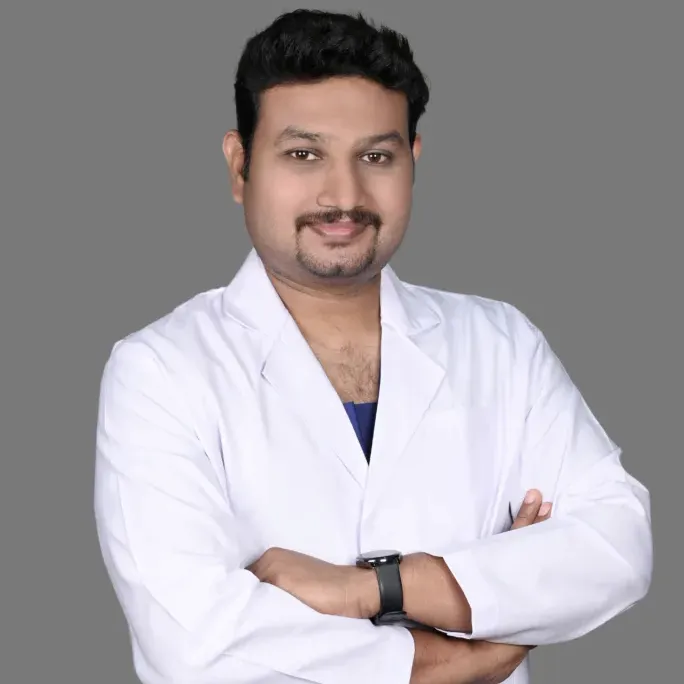
Dr. Pradeep S.
MDS (OMFS) · FHNS · FIBCSOMS
Dr. Kalpa Pandya
MDS (OMFS) · FHNS — Head & Neck Oncology
Authored by
Medically reviewed by