Oral Cancer Myths vs Facts: What Chennai Patients Get Told
Need expert consultation? Book an appointment with Dr. Pradeep S. or Dr. Kalpa Pandya.
Book AppointmentA large part of our clinic time is spent not on surgery but on correcting things patients have been told — by well-meaning relatives, by the internet, or occasionally by a clinician working outside their specialty. Some of these oral cancer myths are harmless. Others actively delay treatment, and a delay of a few months can be the difference between a small excision and a major reconstruction.
Below are the misconceptions we hear most often in Chennai, and what the clinical evidence actually says.
Myth 1: "Only smokers and gutka users get oral cancer"
Fact: tobacco is the biggest risk factor, but never the only one.
Tobacco and areca nut dominate the statistics in Tamil Nadu, and avoiding both genuinely lowers your risk a great deal. But we regularly treat patients who have never used either. HPV infection, alcohol, chronic irritation from a sharp tooth or ill-fitting denture, long-standing precancerous patches, and immunosuppression all cause oral cancer independently of tobacco.
The practical harm of this myth is delay. A non-smoker with a non-healing ulcer assumes it cannot be cancer and waits — sometimes for months. Our guide on oral cancer in non-smokers covers the causes in detail.
Myth 2: "Surgery makes cancer spread"
Fact: leaving cancer untreated is what makes it spread.
This is the single most damaging belief we encounter, because it causes patients to refuse the treatment most likely to cure them. The idea that exposing a tumour to air or cutting into it "wakes it up" has no basis in oncological practice.
Cancer surgery follows strict technique for exactly this reason. The tumour is removed intact with a margin of healthy tissue around it, margins are checked on frozen section during the operation so the surgeon knows before closing that the disease is fully out, and where there is a risk of nodal spread the neck is addressed in the same sitting. Our page on wide local excision explains how margins are managed.
What genuinely allows cancer to spread is time. Every month an untreated oral cancer remains in place, it grows deeper and its chance of reaching the neck nodes rises.
Myth 3: "If it does not hurt, it is not serious"
Fact: early oral cancer is usually painless.
This is the myth that most often explains a late presentation. Patients reasonably assume something dangerous would hurt. In reality, early-stage oral cancer commonly presents as a painless firm lump, or a red or white patch causing no discomfort whatsoever. Pain arrives later, once the tumour involves nerves or deeper muscle.
A painless ulcer that has not healed in three weeks is more concerning than a painful one that is settling — a painful ulcer is usually behaving like ordinary trauma or infection.
Myth 4: "Oral cancer is contagious"
Fact: it cannot be transmitted between people.
Cancer cells cannot pass from one person to another through kissing, sharing food, using the same utensils, or any ordinary contact. We raise this because the belief causes real social harm — patients get isolated at family meals at exactly the point they most need support.
The one genuine nuance: HPV, which contributes to some oral and oropharyngeal cancers, is itself transmissible. But HPV infection is extremely common and only a very small minority of people who carry it ever develop cancer. The virus can spread; the cancer cannot.
Myth 5: "Diet or alternative medicine can cure it"
Fact: nutrition supports treatment — it does not replace it.
Good nutrition genuinely matters during oral cancer treatment. It improves wound healing, helps you tolerate surgery and radiotherapy, and speeds recovery, which is why we involve dietitians from the outset — our guide to nutrition during oral cancer treatment covers this properly.
What no diet, supplement, or herbal preparation does is eliminate an invasive carcinoma. The harm here is not the remedy itself but the months spent trying it. Patients who return after six months of alternative treatment frequently need a substantially larger operation than the one they originally declined. On whether non-surgical routes exist at all, see can oral cancer be treated without surgery.
Myth 6: "Only older people get mouth cancer"
Fact: we routinely treat patients in their thirties and forties.
Incidence does rise with age, but the idea that this is purely an elderly disease is wrong in two ways. HPV-related cancers tend to occur in younger patients. And in India, gutka and areca-nut use often starts in adolescence, so heavy long-term exposure can present far earlier than Western data suggests.
Myth 7: "Surgery will leave me unable to speak or eat"
Fact: reconstruction is planned before the cancer is removed.
This fear is understandable, and it is the reason some patients hesitate. It is also substantially out of date. Reconstruction is not an afterthought — it is designed before the resection begins. Free flaps and local flaps rebuild the tongue, jaw, and lining in the same operation, and speech and swallowing therapy starts while you are still in hospital.
Most patients treated for early cancers return to clear speech and a normal diet. Larger operations take longer and need consistent rehabilitation, but the aim throughout is restoring function. Our guide to life after tongue cancer surgery describes what recovery realistically looks like.
Myth 8: "A diagnosis means it is already too late"
Fact: stage determines outlook, and early stages do well.
Fatalism keeps people out of clinic. Oral cancer caught at stage I or II is treated with a comparatively small operation and has a good prognosis. The disease becomes difficult when it is found late — which is precisely why the earlier myths on this page matter so much.
Our guide on whether mouth cancer is curable sets out what the stages mean for outcome.
What to Do With a Persistent Change
The rule is simple and does not depend on your habits, age, or how much something hurts. Any ulcer, lump, or red or white patch lasting beyond two to three weeks should be examined by someone who treats this regularly.
Dr. Pradeep S. and Dr. Kalpa Pandya consult at Apollo Main Hospital, Greams Road, and see both new diagnoses and second opinions — including remote consultations for families outside Chennai. If you have been reassured but the problem has not resolved, asking for a second look is entirely reasonable.
Next step
Concerned about a symptom you read here? Get a specialist opinion in Chennai.
Dr. Pradeep S. and Dr. Kalpa Pandya consult at Apollo Hospitals, Greams Road. Same-day responses on WhatsApp for most enquiries.
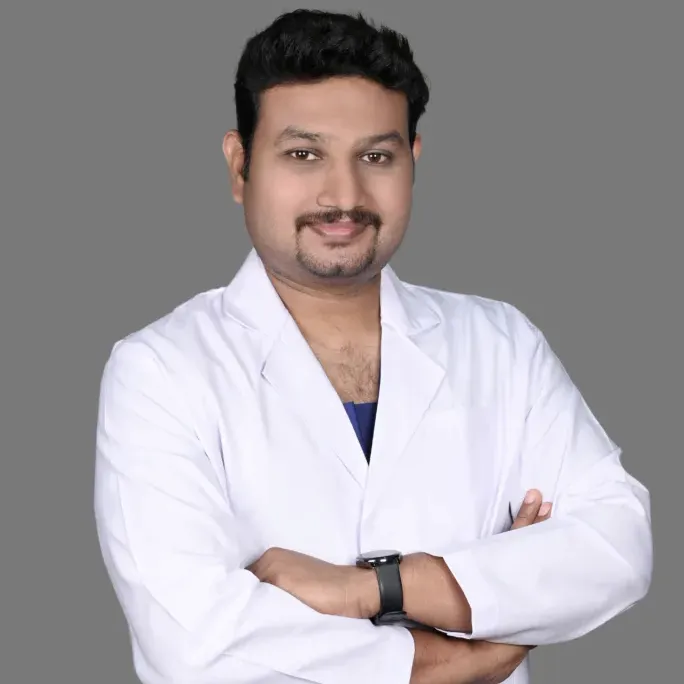
Dr. Pradeep S.
MDS (OMFS) · FHNS · FIBCSOMS

Dr. Kalpa Pandya
MDS (OMFS) · FHNS — Head & Neck Oncology
Authored by
Medically reviewed by