Tongue cancer is the most common oral cavity cancer we treat. Early surgery with clear margins, combined with reconstruction and rehabilitation, gives the best chance of cure while protecting speech and swallowing.
Tongue Cancer Treatment That Protects Speech and Swallowing
Tongue cancer treatment has two goals that have to be pursued together: removing the cancer completely, and keeping the tongue working well enough for you to speak, chew and swallow. Tongue cancer is one of the most common cancers of the mouth, and when it is found early, surgery cures most patients. Even when it is found later, a well-planned operation with reconstruction and the right additional treatment still gives many people a good chance of cure.
Most people who come to us are frightened about two things — whether the cancer can be cured, and whether they will ever talk or eat normally again. This page answers both questions as honestly as we can. It explains how tongue cancer is recognised, how it is staged, what the different operations involve, why the neck is usually treated as well, when radiation is added, and what recovery looks like.
Every plan is individual. What follows is a guide to how decisions are made, not a substitute for an examination. If you already have a biopsy report or scans, bringing them to your first visit lets us give you specific answers much sooner.
Early Signs of Tongue Cancer
Many early tongue cancers are painless, which is why they are often ignored. Most begin on the side (lateral border) of the tongue, where it rubs against the teeth. Any of the following that lasts more than two weeks should be examined by a specialist:
A non-healing ulcer: A sore on the side or underside of the tongue that does not settle with mouth gels or after a sharp tooth is smoothed.
A lump or hard area: A thickening or firm patch you can feel when you press the tongue, sometimes with a raised edge.
A white or red patch: Leukoplakia (white) or erythroplakia (red) patches that do not wipe off. Red patches in particular carry a high risk of hiding early cancer.
Pain or burning: Discomfort that persists, sometimes spreading to the ear on the same side — referred ear pain is a classic sign of a deeper tumour.
Stiffness or bleeding: Difficulty moving the tongue, slurred speech, trouble swallowing, or a spot that bleeds easily.
A neck lump: A firm, painless swelling under the jaw or in the side of the neck can be the first sign that tongue cancer has reached the lymph nodes.
Sharp teeth and ill-fitting dentures cause ulcers too, but a dental ulcer should heal within one to two weeks once the cause is corrected. If it does not, it needs a biopsy — not another course of gels or antibiotics. For a closer look at how these changes are evaluated, read our guide to tongue SCC symptoms, biopsy and staging.
How Tongue Cancer Is Diagnosed and Staged
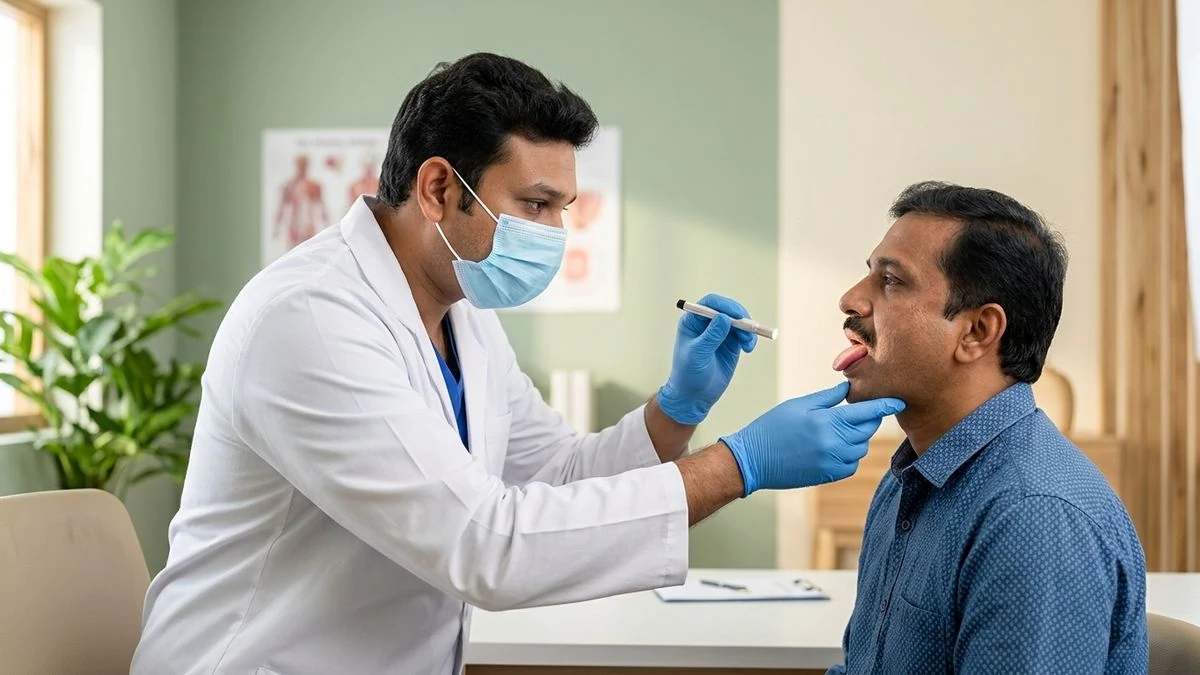
Diagnosis starts with a careful examination of the whole mouth and both sides of the neck. Your surgeon feels the tumour to judge how deep it extends, checks tongue movement, and looks for any second patch elsewhere in the mouth.
Biopsy
A small piece of the suspicious area is removed under local anaesthetic and examined by a pathologist. The biopsy confirms whether it is cancer (usually squamous cell carcinoma) and its grade. A biopsy does not make cancer spread — that is a common myth that delays treatment.
Scans
MRI is usually preferred for the tongue because it shows soft tissue clearly and measures how deeply the tumour has grown. A contrast CT (CECT) is used to look at the jawbone and neck nodes, and a chest scan or PET-CT may be added for larger tumours to check for spread elsewhere.
Depth of invasion
Depth of invasion (DOI) is how far the tumour has grown below the surface lining. Under the AJCC 8th edition staging system, a DOI of more than 5 mm, and again more than 10 mm, moves the tumour into a higher T category. A tumour that looks small on the surface can still be deep, which is why DOI matters more than surface size alone — and why it strongly influences whether the neck needs surgery.
Tongue Cancer Stages and Survival Rates
Staging uses the TNM system: T describes the size and depth of the tumour, N describes spread to the neck lymph nodes, and M describes spread to distant organs. These combine into stages I to IV. Stages I and II are early, localised cancers; stages III and IV mean a larger or deeper tumour, nodal spread, or both. You can read a fuller explanation in our guide to oral cancer stages.
Indian outcome data is the most relevant guide for our patients. In Tata Memorial Centre data on 1,895 patients with oral cavity cancer treated in 2016, about 65% were alive five years after treatment. Five-year survival was about 83% for stage I and about 55% for stage IV. Patients who had surgery, followed by radiotherapy where it was indicated, did best.
These are averages across many patients, not predictions for one person. Your own outlook depends on the depth of the tumour, whether nodes are involved, the margins achieved at surgery, your general health and whether you stop tobacco. The single most powerful factor you can control is how early treatment begins.
Tongue Cancer Surgery: Partial, Hemi, Subtotal and Total Glossectomy
Surgery is the main treatment for tongue cancer. The aim is to remove the tumour with a rim of normal tissue around it in every direction, while keeping as much healthy, mobile tongue as possible. The operation is called a glossectomy, and its extent depends on the tumour's size, depth and position. Our glossectomy surgery page describes the operation itself in more detail.
Partial glossectomy: Removal of the tumour with a safety margin from one part of the tongue. Used for small, early cancers; the remaining tongue usually compensates well and speech changes are often modest.
Hemiglossectomy: Removal of one half of the tongue, front to back. Used when the tumour is larger or deeper on one side; a flap is usually needed to restore bulk.
Subtotal glossectomy: Removal of more than half of the tongue, sometimes with part of the floor of the mouth. Reconstruction is essential to restore shape and movement.
Total glossectomy: Removal of the whole tongue for very advanced disease. It is uncommon, needs major reconstruction, and is followed by intensive swallowing rehabilitation.
When a tumour reaches the floor of the mouth or the jawbone, part of the jaw may be removed together with the tongue in a single block. The plan is always discussed with you in detail, using your own scans, before surgery.
Why the Neck Is Treated Even When the Cancer Is in the Tongue
The tongue has a rich lymphatic network, so tongue cancer can spread to the neck lymph nodes early — sometimes before the nodes are large enough to feel or show on a scan. This hidden (occult) spread is the main reason a neck dissection is often done at the same operation as the glossectomy, even when the neck looks normal.
The strongest evidence comes from India. A landmark Tata Memorial Centre trial by D’Cruz and colleagues, published in the New England Journal of Medicine in 2015, compared removing the neck nodes upfront (elective neck dissection) with watching the neck and operating only if nodes appeared. In early, node-negative oral cancers, upfront neck dissection improved three-year overall survival to 80.0%, compared with 67.5% with the wait-and-watch approach.
The extent of the neck operation is tailored to you. A selective neck dissection removes the node groups most at risk and preserves important nerves, muscles and veins; a more extensive operation is reserved for nodes that are already involved. Our guide on when the neck needs surgery explains this decision step by step.
Reconstruction After Glossectomy
Small defects can often be closed directly or left to heal. When a larger part of the tongue is removed, the missing tissue is replaced so that the remaining tongue can move freely and push food back to swallow.
For hemi- and larger glossectomies, the standard is free flap reconstruction: thin, pliable tissue from the forearm (radial forearm flap) or thigh (anterolateral thigh flap) is moved to the mouth, and its blood vessels are joined to vessels in the neck under a microscope. This microvascular step is performed together with our reconstructive surgical colleague as part of the same operation. Where a free flap is not suitable, a pedicled flap from the chest wall is an alternative.
Reconstruction is planned before surgery, not improvised during it. That planning is what allows the cancer to be removed with safe margins without giving up more function than necessary.
When Radiation or Chemotherapy Is Added
After surgery, the removed tissue is examined in detail and a final histopathology report is issued. This report — not the biopsy — decides whether you need further treatment. Our guide to the oral cancer histopathology report explains each term you will see.
Margins: The distance between the cancer and the cut edge. More than 5 mm is clear, 1–5 mm is close, and less than 1 mm (or tumour at the edge) is treated as positive.
Adjuvant chemoradiation: Recommended when a margin is positive or a lymph node shows extranodal extension (ENE) — cancer breaking through the node capsule.
Postoperative radiotherapy: Usually recommended for close margins, perineural invasion (PNI), lymphovascular invasion (LVI), larger or deeper tumours (pT3–T4), or any involved nodes.
Timing also matters. Radiotherapy should ideally begin within about six weeks of surgery, so recovery, nutrition and dental preparation are planned in advance. Many small, early tongue cancers with clear margins and no nodal spread need no further treatment beyond regular follow-up.
Speech, Swallowing and Recovery After Tongue Cancer Surgery
Recovery happens in stages. After major surgery with reconstruction, most patients stay in hospital about one to two weeks. A temporary tracheostomy (breathing tube in the neck) may be used for a few days while swelling settles, and a feeding tube supports nutrition until swallowing is safe.
Swallowing therapy begins once the wound is healing, moving from sips to soft foods and then to a normal diet. Speech therapy focuses on clarity and strength. After a partial glossectomy, many people speak almost normally within weeks; after larger resections, improvement continues over several months. Our article on life after tongue cancer surgery describes what patients typically experience, and speech and swallowing therapy explains the exercises involved.
Follow-up is close in the first two years, when most recurrences happen, and continues long term. If cancer does return, there are still options, including salvage surgery — see options for recurrent or advanced mouth cancer. Stopping tobacco and areca nut completely lowers the risk of a second cancer.
What Affects the Cost of Tongue Cancer Treatment
There is no single price for tongue cancer treatment, because the plan varies so much between patients. The main factors are:
Extent of surgery: A partial glossectomy is a much smaller operation than a hemi- or total glossectomy, or one that includes part of the jaw.
Neck dissection: Whether one or both sides of the neck are treated.
Reconstruction: Direct closure, a local flap or a microvascular free flap, which adds operating time and specialist input.
Hospital stay and intensive care: Usually longer after reconstruction.
Additional treatment: Whether postoperative radiotherapy or chemoradiation is needed.
We give you a written estimate once your scans and biopsy have been reviewed. Our guide to oral cancer treatment cost explains each component in more detail.
Questions to Ask Before Tongue Cancer Surgery
Going into surgery with clear answers makes the whole process less frightening. Questions worth asking include:
Stage and depth: What stage is my cancer, and how deep is it on the MRI?
Extent of surgery: How much of my tongue will be removed, and will the neck be treated on one or both sides?
Reconstruction: Will I need a flap, and where will the tissue come from?
Speech and swallowing: What should I realistically expect in the first month, and after six months?
Further treatment: How likely is radiotherapy, and what would make it necessary?
Bringing your biopsy report, scans and a list of your medicines to the first visit makes these answers much more specific.
Tongue Cancer Surgery in Chennai: What to Expect at Apollo Main Hospital, Greams Road
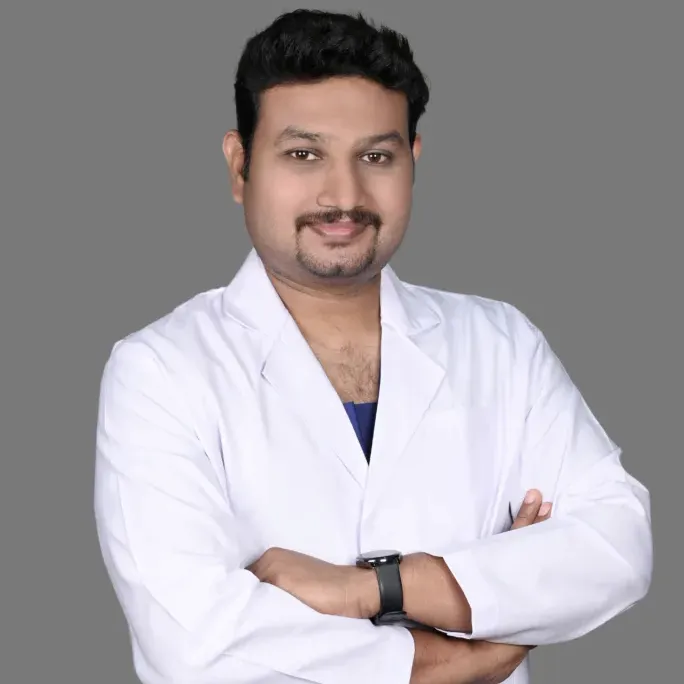
Your care is led by Dr. Pradeep S., an oral and maxillofacial surgeon with a fellowship in head and neck surgical oncology (FHNS), international board certification (FIBCSOMS) and more than 15 years of experience in oral cancer surgery, including three years in the Department of Head and Neck Oncology at Apollo Proton Cancer Centre. He works with Dr. Kalpa Pandya, and both consult at Apollo Main Hospital, Greams Road.
Treatment decisions are made together with radiation and medical oncologists, pathologists, anaesthetists, and nutrition and speech therapy teams, so that surgery, reconstruction and any further treatment happen in the right order without avoidable delay.
If you have already been advised surgery elsewhere and would like another view, we offer an oral cancer second opinion, including remote review of reports and scans for patients travelling from outside the city. Cancer of the inner cheek is covered on its own page about buccal mucosa cancer treatment.
To discuss your diagnosis, call +91 96633 03747 or book a consultation for tongue cancer treatment in Chennai.
Finding us in Chennai
Mouth Cancer Surgeons is the practice of Dr. Pradeep S. and Dr. Kalpa Pandya, who consult at Apollo Main Hospital, Greams Road, Chennai. Patients come to us for tongue cancer treatment from across Tamil Nadu, West Bengal, Bangladesh and the wider region, and we offer remote second opinions for those who need to plan travel.
Frequently asked questions
What is the survival rate for tongue cancer?
Survival depends mainly on stage. In Tata Memorial Centre data on oral cavity cancers treated in 2016, about 83% of patients with stage I disease were alive at five years, falling to about 55% for stage IV, with about 65% overall. Depth of invasion, lymph node spread and clear surgical margins have the biggest influence on an individual outlook.
Is tongue cancer curable?
Yes. Early tongue cancer is curable in most patients with surgery alone, or surgery followed by radiotherapy. Advanced tongue cancer can also be cured in a substantial number of patients when the tumour is removed completely and the right additional treatment is given. The earlier treatment starts, the better the chance of cure and of preserving function.
Will I be able to speak and eat after tongue cancer surgery?
Most patients do. After a partial glossectomy, speech and eating usually return close to normal within weeks. After larger operations, reconstruction with a flap restores bulk and movement, and speech and swallowing therapy help you regain clear speech and a normal or modified diet over a few months.
What is the difference between partial, hemi and total glossectomy?
A partial glossectomy removes only the tumour with a safety margin. A hemiglossectomy removes one half of the tongue, and a subtotal glossectomy removes more than half. A total glossectomy removes the whole tongue and is reserved for very advanced cancers. The larger the operation, the more important reconstruction and rehabilitation become.
Do I need radiation after tongue cancer surgery?
Not always. Small tumours with clear margins and no lymph node spread often need only follow-up. Radiotherapy is recommended when the final report shows close margins, nerve or vessel invasion, a deep or large tumour, or involved nodes. Chemotherapy is added to radiotherapy for positive margins or extranodal extension.
Why do I need neck surgery if the cancer is only on my tongue?
Tongue cancer can spread to the neck lymph nodes before they can be felt or seen on scans. A large Tata Memorial Centre trial showed that removing the neck nodes at the time of surgery in early, node-negative oral cancer improved three-year survival to 80.0%, compared with 67.5% when the neck was watched.
How long is the hospital stay and recovery?
After a small excision the stay is short, often a few days. After a glossectomy with neck dissection and free flap reconstruction, most patients stay about one to two weeks. Wound healing takes a few weeks, while speech and swallowing continue to improve over several months with therapy.
How much does tongue cancer treatment cost?
The cost depends on the extent of the glossectomy, whether one or both sides of the neck are treated, the type of reconstruction, the length of hospital stay and whether radiotherapy is needed afterwards. We provide a written estimate once your biopsy and scans have been reviewed at consultation.
Can a sharp tooth cause tongue cancer?
A sharp tooth, broken filling or ill-fitting denture can cause a persistent ulcer, and long-term irritation may contribute to change in the lining. But a dental ulcer should heal within one to two weeks once the cause is corrected. One that does not heal must be biopsied rather than watched.
How soon can I get an appointment or second opinion?
Suspected and confirmed cancers are seen as a priority. Call +91 96633 03747 to book a consultation with Dr. Pradeep S. and Dr. Kalpa Pandya at Apollo Main Hospital, Greams Road, or send your reports and scans for a remote second opinion if you are travelling from outside the city.
Who treats tongue cancer at Mouth Cancer Surgeons?
Dr. Pradeep S. (Consultant, Oral & Maxillofacial Surgeon — specialist in oral, head and neck cancer surgeries) and Dr. Kalpa Pandya (Consultant, Oral & Maxillofacial Surgeon — specialist in OPMD, Facial Trauma, Dental Implants). You are cared for by the same two specialists from diagnosis through recovery.
Where do you consult in Chennai?
We consult and operate at Apollo Main Hospital, Greams Road.