
What Is Maxillofacial Surgery? It is a specialized branch of surgery that focuses on treating diseases, injuries, and abnormalities of the mouth, jaw, face, and neck. In the context of mouth cancer, this surgical specialty plays a critical role in early diagnosis, tumor removal, and reconstruction. Understanding What Is Maxillofacial Surgery? helps patients recognize why timely surgical evaluation is essential for both survival and quality of life. With advances in medical imaging and surgical techniques, maxillofacial surgery has become a cornerstone of modern oral cancer management.
What is Oral and Maxillofacial Surgery?
What is Oral and Maxillofacial Surgery? It is a dual-trained surgical specialty that combines dental knowledge with advanced medical and surgical expertise. This field addresses complex conditions involving the oral cavity, facial bones, jaw joints, and surrounding soft tissues.
What is Oral Maxillofacial Surgery is often misunderstood as routine dental surgery, but it extends far beyond tooth extractions. It includes cancer surgery, jaw reconstruction, facial trauma management, and corrective procedures that restore both function and appearance. In mouth cancer care, oral and maxillofacial surgery ensures precise tumor removal while preserving speech, swallowing, and facial symmetry.
Who is a Maxillofacial Surgeon?
A maxillofacial surgeon is a highly trained specialist who diagnoses and surgically treats conditions affecting the mouth, jaws, face, and neck. These surgeons undergo extensive education in dentistry, medicine, and advanced surgical training.
In mouth cancer cases, a maxillofacial surgeon evaluates suspicious lesions, performs biopsies, plans tumor excision, and carries out reconstructive procedures when required. Understanding What Is Maxillofacial Surgery? also means recognizing the expertise of the surgeon behind these complex interventions. Their role is vital in ensuring complete cancer removal while minimizing long-term functional impairment.
Role of Maxillofacial Surgery in Mouth Cancer Treatment
What Is Maxillofacial Surgery? becomes especially significant in the treatment of oral and head-and-neck cancers. Maxillofacial surgery is often the primary treatment modality for mouth cancer, particularly in early and locally advanced stages.
Key roles include:
- Surgical removal of oral tumors
- Biopsy and cancer staging
- Removal of a portion of the jawbone affected by cancer spread.
- Neck dissection for lymph node involvement
- Reconstruction using grafts or flaps to restore function
By addressing both cancer control and rehabilitation, maxillofacial surgery directly impacts survival rates and post-treatment quality of life.
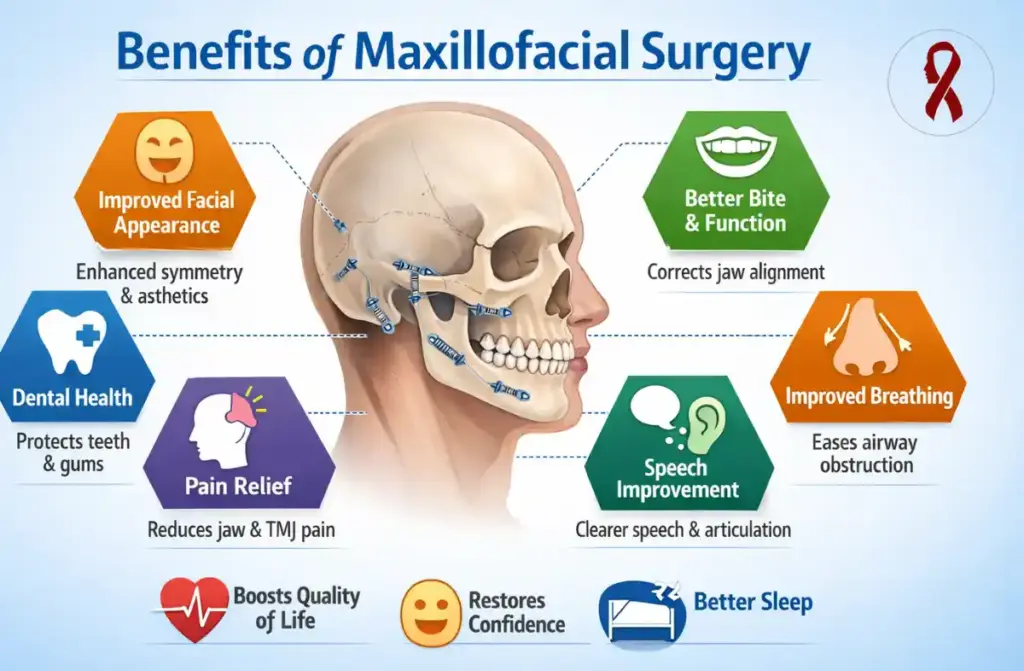
Benefits of Maxillofacial Surgery
The benefits of maxillofacial surgery extend beyond cancer removal. When patients understand What Is Maxillofacial Surgery?, they also understand its advantages in comprehensive care.
Key benefits include:
- Complete and precise tumor removal
- Early cancer detection through biopsy
- Preservation of speech, chewing, and swallowing
- Facial reconstruction for improved appearance
- Reduced recurrence rates with proper surgical margins
These benefits highlight why maxillofacial surgery is central to modern mouth cancer treatment protocols.
What to Expect Before, During, and After Surgery
Knowing What Is Maxillofacial Surgery? also involves understanding the patient journey.
Before surgery:
- Clinical examination and imaging (CT/MRI)
- Biopsy and cancer staging
- Pre-surgical counseling and planning
During surgery:
- Procedure performed under anesthesia
- Tumor excision with safe margins
- Reconstruction if required
After surgery:
- Pain and swelling management
- Speech and swallowing rehabilitation
- Follow-up care and cancer surveillance
Many Oral Surgery Procedures involved in mouth cancer care are planned to minimize complications and promote faster recovery.
When Should You Consult a Maxillofacial Surgeon?
Early consultation is crucial. You should seek evaluation if you experience:
- Mouth ulcers lasting more than two weeks
- Red or white patches in the mouth
- Jaw swelling or facial asymmetry
- Difficulty swallowing or speaking
- Persistent mouth pain or numbness
Understanding What Is Maxillofacial Surgery? encourages timely action, especially for individuals with tobacco, smoking, or alcohol habits. Early intervention can significantly reduce the extent of surgery required.
Conclusion
What Is Maxillofacial Surgery? It is a life-saving and function-preserving surgical specialty, particularly vital in mouth cancer management. From early diagnosis to tumor removal and reconstruction, maxillofacial surgery ensures comprehensive care under one specialty. Awareness of What Is Maxillofacial Surgery? empowers patients to seek early treatment, improving outcomes and long-term quality of life. Choosing a timely surgical consultation can make a decisive difference in oral cancer care.