
Oral cancer is a serious health condition that affects the mouth and surrounding areas of the head and neck. It develops when abnormal cells in the oral tissues grow uncontrollably and form malignant tumors. Oral cancer can affect the lips, tongue, gums, cheeks, roof of the mouth, floor of the mouth, and throat.
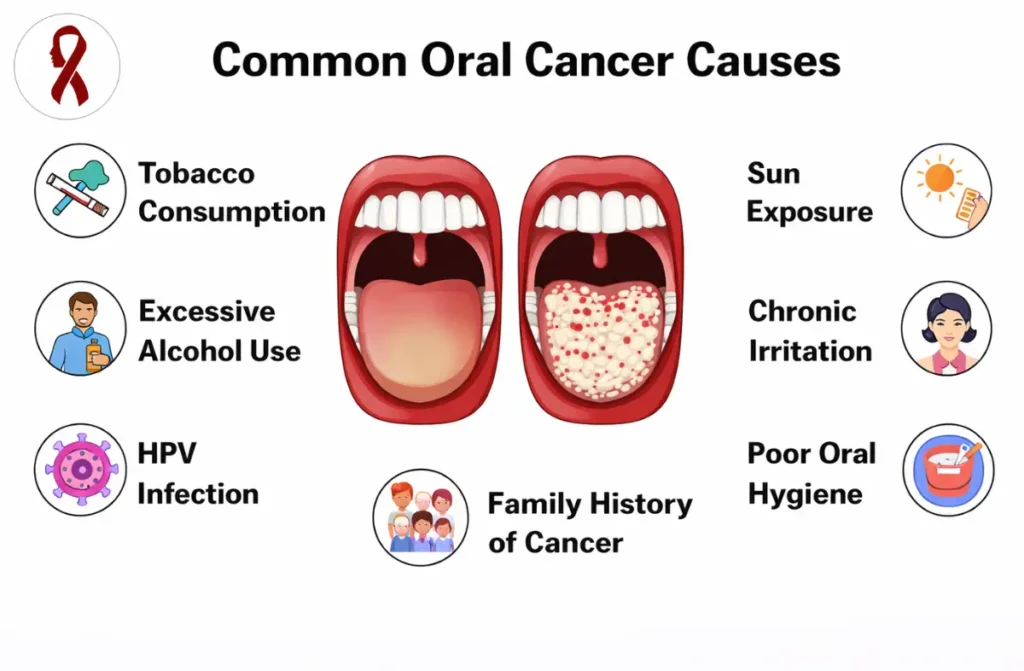
Although oral cancer can develop in anyone, certain lifestyle habits such as tobacco use, excessive alcohol consumption, poor oral hygiene, and human papillomavirus (HPV) infection significantly increase the risk.
Early diagnosis plays a major role in improving treatment outcomes and survival rates. Unfortunately, many people ignore the early signs because symptoms often appear mild in the beginning. Understanding the different types of oral cancer, their symptoms, causes, and treatment options can help individuals recognize warning signs early and seek timely medical attention.
What is Oral Cancer?
Oral cancer refers to cancers that develop in the tissues of the mouth or throat. It belongs to a broader group called head and neck cancers.
The condition begins when healthy cells in the oral cavity undergo abnormal genetic changes, causing uncontrolled growth.
Oral cancer may develop in:
- Lips
- Tongue
- Inner cheeks
- Gums
- Floor of the mouth
- Roof of the mouth
- Salivary glands
- Tonsils
- Oropharynx
If left untreated, oral cancer can spread to nearby tissues, lymph nodes, and other parts of the body.
Common symptoms of Oral Cancer
Symptoms of oral cancer can vary depending on the affected area and cancer stage.Common Warning Signs
- Persistent mouth sores that do not heal
- Red or white patches inside the mouth
- Pain or difficulty while swallowing
- Lumps or thickened areas in the mouth
- Unexplained bleeding in the mouth
- Chronic sore throat
- Loose teeth without dental cause
- Jaw pain or stiffness
- Ear pain
- Numbness in the mouth or lips
- Persistent bad breath
- Changes in voice or speech
Any symptoms lasting more than two weeks should be evaluated by a healthcare professional.
Major Types of Oral Cancer
There are several types of oral cancer depending on the type of cells involved and the location where the cancer develops.
1. Squamous Cell Carcinoma
Squamous cell carcinoma is the most common type of oral cancer.
It accounts for the majority of oral cancer cases and develops in the thin, flat squamous cells lining the mouth and throat.
Common Areas Affected
- Tongue
- Lips
- Floor of the mouth
- Inner cheeks
- Gums
- Roof of the mouth
Symptoms
- Non-healing mouth ulcers
- Painful swallowing
- White or red patches
- Bleeding sores
- Thickened oral tissues
Risk Factors
- Tobacco smoking
- Chewing tobacco
- Heavy alcohol consumption
- HPV infection
- Poor oral hygiene
- Sun exposure to lips
- Treatment Options
- Surgery
- Radiation therapy
- Chemotherapy
- Targeted therapy
Early-stage squamous cell carcinoma often responds well to treatment when detected quickly.
2. Verrucous Carcinoma
Verrucous carcinoma is a rare and slow-growing form of squamous cell carcinoma.
It usually appears as a thick, wart-like growth inside the mouth.
Common Areas Affected
- Gums
- Cheeks
- Tongue
- Buccal mucosa
Characteristics
- Slow progression
- Rarely spreads to distant organs
- Locally invasive
Symptoms
- Thick white patches
- Wart-like growths
- Difficulty chewing
- Persistent irritation
Risk Factors
- Long-term tobacco chewing
- Smoking
- Chronic irritation
Treatment
- Surgery is often the primary treatment because verrucous carcinoma responds less effectively to radiation therapy.
- Although less aggressive than other cancers, delayed treatment can still lead to serious tissue damage.
3. Salivary Gland Cancer
Salivary gland cancer develops in the glands responsible for producing saliva.
There are several salivary glands located throughout the mouth and throat.
Common Salivary Glands Affected
- Parotid glands
- Submandibular glands
- Sublingual glands
Symptoms
- Swelling near the jaw or neck
- Facial numbness
- Pain in the mouth or face
- Difficulty swallowing
- Facial muscle weakness
Risk Factors
- Radiation exposure
- Advanced age
- Family history
- Certain workplace chemical exposures
Treatment
- Surgical removal
- Radiation therapy
- Chemotherapy in advanced cases
Some salivary gland cancers grow slowly, while others can be aggressive.
4. Lymphoma of the Oral Cavity
Lymphoma is a cancer affecting the lymphatic system and immune cells.
Although lymphomas commonly affect lymph nodes, they can also develop in oral tissues such as the tonsils or base of the tongue.
Symptoms
- Swollen lymph nodes
- Persistent sore throat
- Difficulty swallowing
- Mouth swelling
- Fatigue
- Weight loss
Types
- Hodgkin lymphoma
- Non-Hodgkin lymphoma
Treatment
- Chemotherapy
- Radiation therapy
- Immunotherapy
The treatment approach depends on the specific lymphoma type and cancer stage.
5. Oral Melanoma
Oral melanoma is a rare but aggressive cancer that develops from pigment-producing melanocyte cells inside the mouth.
Unlike skin melanoma, oral melanoma often goes unnoticed until advanced stages.
Common Areas Affected
- Roof of the mouth
- Gums
- Inner cheeks
Symptoms
- Dark brown or black patches
- Bleeding lesions
- Swelling
- Pain or discomfort
- Loose teeth
Risk Factors
The exact cause remains unclear, but genetic factors may contribute.
Treatment
- Surgery
- Radiation therapy
- Immunotherapy
Because oral melanoma spreads quickly, early diagnosis is critical.
6. Adenocarcinoma
Adenocarcinoma develops in glandular tissues of the oral cavity.
It often affects the minor salivary glands found throughout the mouth.
Symptoms
- Swelling or lumps
- Persistent pain
- Difficulty swallowing
- Mouth discomfort
Treatment
- Surgery
- Radiation therapy
- Chemotherapy when necessary
The prognosis depends on tumor size, location, and stage at diagnosis.
7. Mucoepidermoid Carcinoma
Mucoepidermoid carcinoma is one of the most common salivary gland cancers.
It develops from mucus-producing cells.
Common Areas Affected
- Salivary glands
- Roof of the mouth
- Tongue
Symptoms
- Swelling
- Facial pain
- Difficulty speaking
- Trouble swallowing
Treatment
- Surgery
- Radiation therapy
Low-grade tumors generally have better outcomes than aggressive high-grade cancers.
8. Adenoid Cystic Carcinoma
Adenoid cystic carcinoma is a rare cancer affecting glandular tissues.
It is known for slow growth but may spread along nerves.
Symptoms
- Facial pain
- Numbness
- Swelling
- Difficulty swallowing
Characteristics
- Slow progression
- Potential for recurrence
- Nerve involvement
Treatment
- Surgical removal
- Radiation therapy
Long-term follow-up is important because recurrence can occur years later.
Causes and Risk Factors of Oral Cancer
Several factors can increase the risk of developing oral cancer.
Tobacco Use
Smoking cigarettes, cigars, pipes, and chewing tobacco significantly increases oral cancer risk.
Excessive Alcohol Consumption
Heavy alcohol use damages oral tissues and increases cancer risk, especially when combined with tobacco.
Human Papillomavirus (HPV)
Certain HPV strains are associated with oral and throat cancers.
Poor Oral Hygiene
Chronic irritation, gum disease, and untreated dental problems may contribute to oral tissue damage.
Sun Exposure
Excessive sunlight exposure increases the risk of lip cancer.
Unhealthy Diet
Diets lacking fruits and vegetables may weaken the body’s natural defenses.
Weakened Immune System
- People with weakened immunity may face higher cancer risks.
- Understanding these risk factors helps support prevention and early detection.
How Oral Cancer is Diagnosed
- Early diagnosis improves treatment success.
- Healthcare providers use several methods to identify oral cancer.
Physical Examination
Doctors examine the mouth, throat, neck, and lymph nodes for abnormalities.
Biopsy
A tissue sample is removed and tested for cancer cells.
Imaging Tests
Scans may include:
- X-rays
- CT scans
- MRI scans
- PET scans
Endoscopy
- Doctors may use specialized cameras to examine deeper throat structures.
- Regular dental checkups can also help identify early signs of oral cancer.
Treatment options for Oral Cancer
Treatment depends on:
- Cancer type
- Tumor location
- Cancer stage
- Patient health condition
Surgery
Surgical removal of tumors is often the first treatment option.
Radiation Therapy
High-energy radiation destroys cancer cells.
Chemotherapy
Anti-cancer drugs may be used to shrink or destroy tumors.
Targeted Therapy
Certain medications specifically target cancer cell growth.
Immunotherapy
- Immunotherapy helps the immune system fight cancer more effectively.
- Many patients require a combination of treatments for the best results.
Prevention of Oral Cancer
Although not all oral cancers can be prevented, healthy lifestyle habits can significantly reduce risk.
- Avoid Tobacco Products: Stopping smoking and chewing tobacco greatly lowers cancer risk.
- Limit Alcohol Consumption: Moderate alcohol intake helps protect oral tissues.
- Maintain Good Oral Hygiene: Regular brushing, flossing, and dental visits support oral health.
- Eat a Healthy Diet: Fruits and vegetables provide antioxidants that support cell protection.
- Protect Lips From Sun Exposure: Use lip balms with sun protection when outdoors.
- Get Regular Dental Checkups: Dentists can identify suspicious oral changes early.
- HPV Vaccination: Vaccination may reduce the risk of HPV-related cancers.
Prevention and early detection remain essential for improving outcomes.
Importance of Early Detection
Oral cancer detected during early stages has a much higher survival rate.
Unfortunately, many cases are diagnosed late because symptoms are ignored or mistaken for minor dental problems.
People should seek medical evaluation if they experience:
- Persistent mouth sores
- Unexplained swelling
- Difficulty swallowing
- Long-lasting oral pain
- White or red patches
Early diagnosis often leads to less aggressive treatment and better recovery outcomes.
Living with Oral Cancer
Oral cancer treatment may affect speaking, eating, swallowing, and emotional well-being.
Supportive care can help patients manage physical and emotional challenges.
Supportive Care may Include
- Nutritional counseling
- Speech therapy
- Pain management
- Psychological counseling
- Rehabilitation services
Family support and regular follow-up care are also important during recovery.
Conclusion
Oral cancer includes several different types of cancers affecting the mouth, throat, salivary glands, and surrounding tissues. Squamous cell carcinoma remains the most common form, but other types such as verrucous carcinoma, oral melanoma, salivary gland cancer, and lymphoma can also develop within the oral cavity.
Understanding the symptoms, causes, and risk factors of oral cancer can help individuals recognize warning signs early and seek timely medical attention. Healthy lifestyle habits, regular dental checkups, avoiding tobacco, and maintaining good oral hygiene play an important role in prevention. Early detection remains one of the most effective ways to improve treatment outcomes and survival rates. By increasing awareness and encouraging regular oral health monitoring, individuals can take proactive steps toward protecting their long-term health and well-being.